
News & Insights
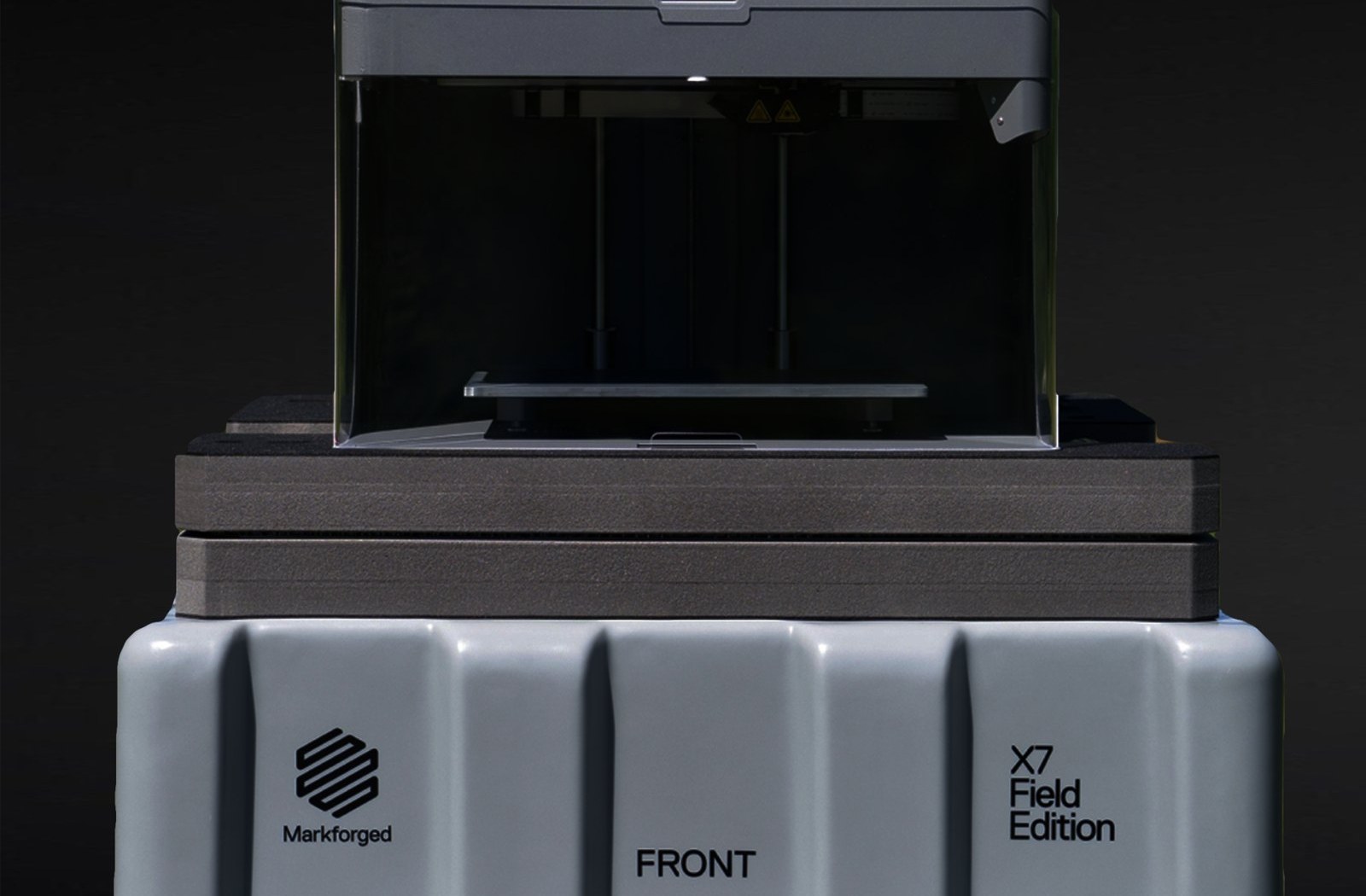
300 printers it supplied face validation
The announcement's own subhead states the nature of it plainly: a streaming, IP-protected manufacturing network. The contract buys neither equipment nor parts. What it has to deliver is a secure digital manufacturing environment the government can validate, and a conclusion: that complex defense components can be produced on demand, at distributed locations, with full data security, traceability and quality assurance throughout. NCDMM is the prime contractor, Automation Alley leads the design and validation work, and Markforged and Fraunhofer USA are the executing technology and research partners. The announcement describes them respectively as a leading provider of industrial AM systems and a world-class applied research organisation.
“Phase I gives us the opportunity to demonstrate, in a real and rigorous way, that secure distributed additive manufacturing is not just possible — it is ready.”
Tom Kelly, Executive Director and CEO, Automation Alley (from the 15 October 2026 announcement)
What the contract covers
A defense contract that buys neither hardware nor parts
Per the announcement, Phase I comprises three pieces of technical work: developing a secure encrypted digital workflow architecture aligned with Cybersecurity Maturity Model Certification (CMMC) and National Institute of Standards and Technology (NIST) cybersecurity standards; identifying and validating candidate polymer and metallic weapon system components; and producing those parts using validated processes. The last item is worth noting — these are not samples, but parts made to qualified parameters.
The division of labour across the four organisations is clear. NCDMM is the prime contractor and also manages America Makes, which the announcement calls the nation's leading public-private partnership for AM technology and education. NCDMM itself operates seven locations nationwide, manages the Youngstown Innovation Hub and El Paso Makes, and is a subsidiary of the Manufacturing Technology Deployment Group (MTDG). Automation Alley is the Task Order awardee and leads design and validation of the secure digital manufacturing environment. Markforged supplies industrial additive manufacturing systems, and Fraunhofer USA handles applied research. Automation Alley describes the combination as bringing together complementary expertise in AM technology, cybersecurity and manufacturing process validation.
The shape of the problem
Obsolescence puts readiness on a shelf
The announcement is direct about the pain point: legacy defense components frequently face supply chain disruptions, long lead times and limited domestic production capacity. In a sustainment system those three are a single problem. A component out of production for a decade may have no active manufacturer, no surviving tooling and a single qualified supplier. A part of trivial value can hold a vehicle, a vessel or an aircraft in place for weeks or months.
The traditional hedge is inventory: build the parts in advance and hold them, trading capital, space and obsolescence for time. Additive manufacturing offers a different route — hold the file rather than the part, and make it near the point of need when the need appears. The idea is not new. What has kept it out of the defense system was never the printing technology but the data: manufacturing instructions are the weapon system's intellectual property, and once released, the design is gone.
Streaming manufacturing
Instructions licensed the way media is licensed
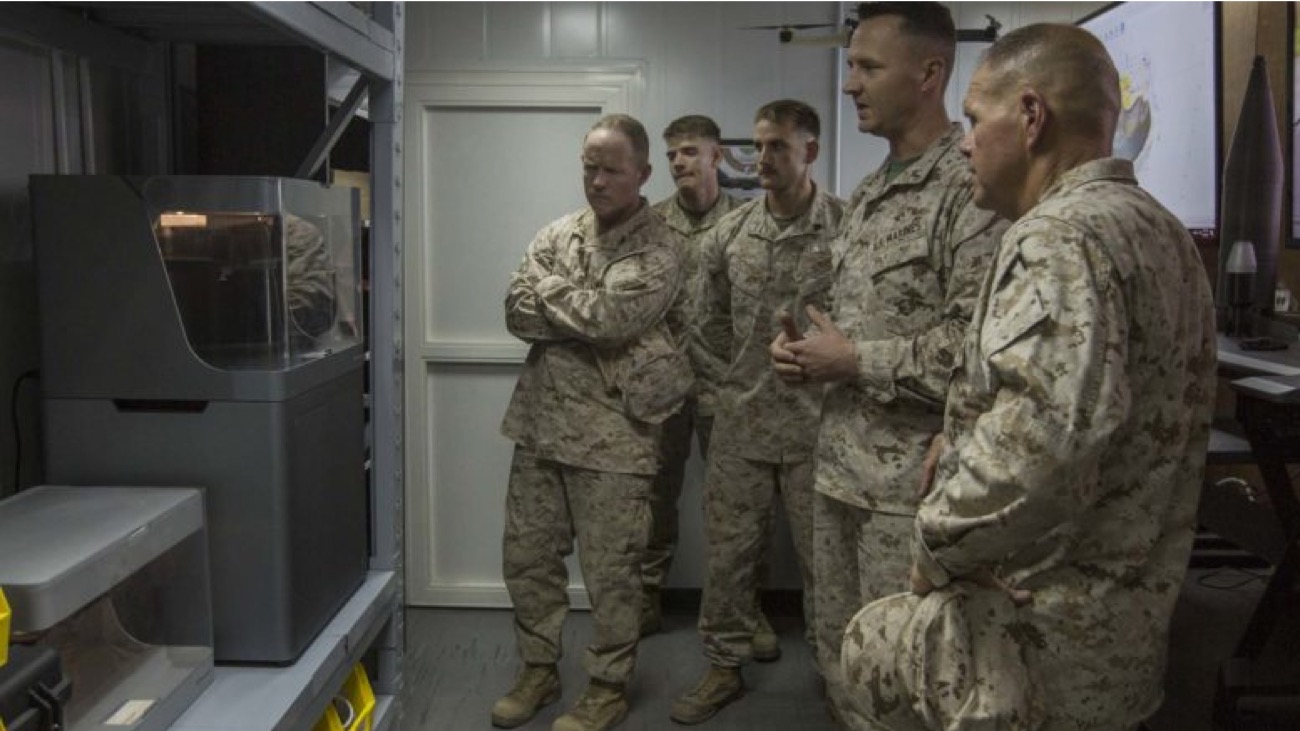
The model under validation is what Automation Alley calls streaming manufacturing, and the announcement draws the analogy explicitly: as digital media is securely licensed and streamed, so manufacturing instructions are streamed to the point of production under control, licensable and revocable. The force of the analogy is not in the technical form but in the relationship it implies — streaming has never meant handing over the file; it means letting it be used under conditions that can be withdrawn.
If the logic holds, what the military procures shifts from parts to the right to use capacity. That is a different relationship from conventional defense procurement.
The core deliverable
The method and the proof have to travel together
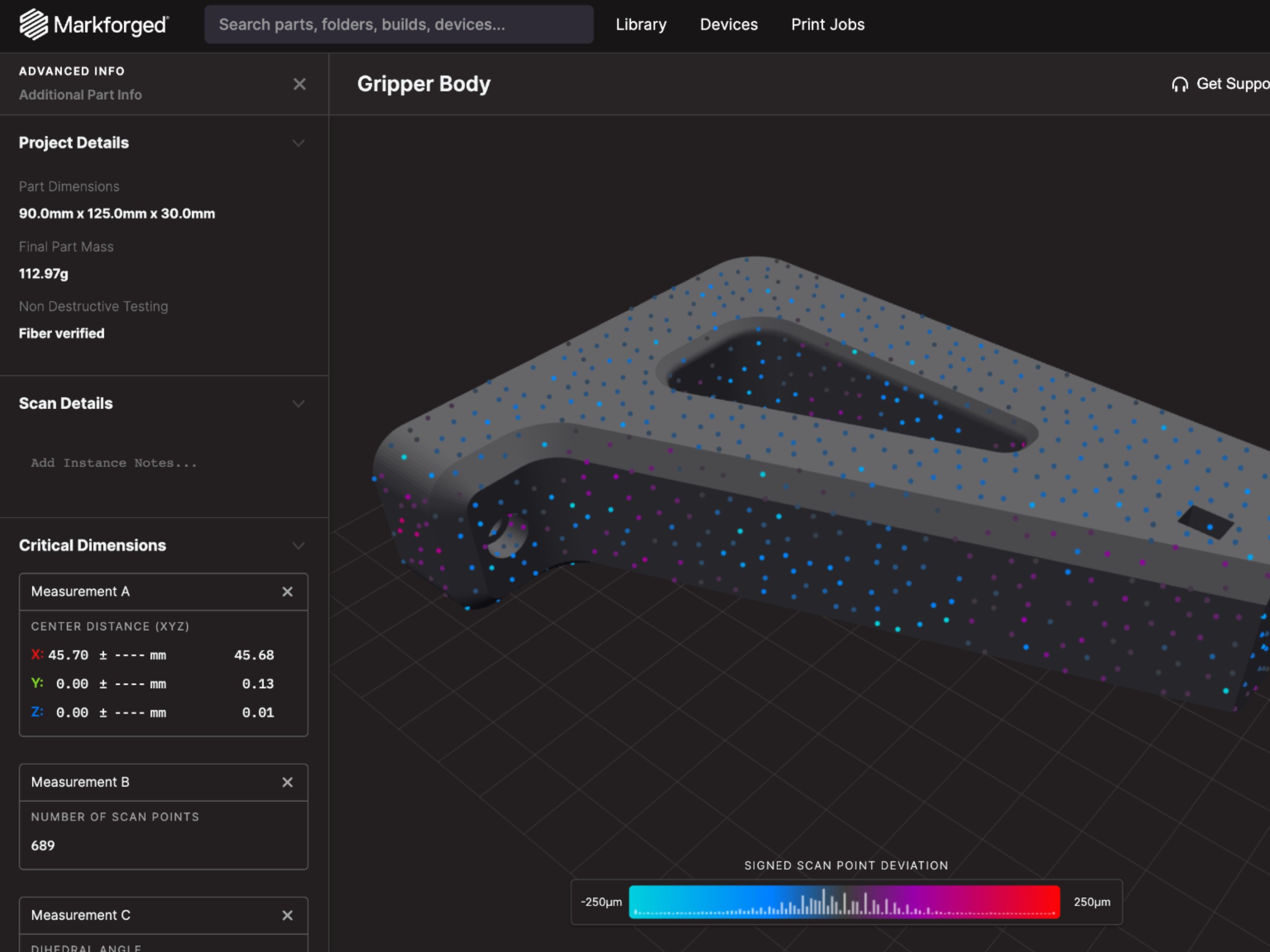
The announcement states the core deliverable precisely: demonstrating secure, end-to-end transfer of smart product recipes (SPRs) to distributed manufacturers, with complete digital quality assurance recipes for each part produced.
That sentence binds two things the industry has long kept apart. How the part is made is one question; why anyone should believe it was made correctly is another. Under centralised production the second was carried by supplier qualification, audit and batch records. Once production disperses, so does that machinery of proof — and what the contract requires is that it travel with the file instead.
This is the hinge on which defense acceptance turns. Once production is no longer centralized, the burden of proving quality needs a new carrier — otherwise what has been distributed is not just capacity but risk.
Not starting from zero
2020, 300 printers, and one real activation
The programme sits inside Project DIAMOnD — Distributed, Independent, Agile Manufacturing on Demand — Automation Alley's flagship defense manufacturing initiative. Per its own public materials the network was not created for this contract: it was established in 2020 through CARES Act funding, initially to accelerate digital transformation among Michigan manufacturers and strengthen PPE supply chains, and as of that publication had awarded 300 3D printers to manufacturers across Michigan, spanning automotive, aerospace, industrial machining and consumer products.
In normal operation each manufacturer uses its printer for its own industrial parts; for emergency orders the network is mobilised as a whole. The documented instance on Automation Alley's own page is 3D printing tourniquet parts for the Ukrainian war zone. Markforged supplied the printers for that original rollout.
In other words, the distributed network this contract sets out to validate is not an architecture on paper. It is a physical network that has run for five years and has been activated in earnest once. What Phase I adds is the layer never formally validated: data security, and proof of quality.
Why it matters in Asia
The barrier is moving from equipment to data governance
In the United States this reads as a defense contract, but the problem it addresses is not confined to defense. Taiwan and Viet Nam have spent recent years doing the same thing: distributing production sites and distributing risk. What most companies hit afterwards is the same obstacle — once the drawing leaves, it does not come back. It is why a good number of critical parts still stay with the original manufacturer, slower and more expensive though that is.
Markforged's own reading is that equipment can be bought and networks can be built, but whether they clear a customer's security review — particularly a government body's or a tier-one supplier's — is becoming the dividing line. For aerospace MRO, rail, energy and heavy industry customers carrying a spare parts burden, digital inventory replacing physical inventory moves from concept to a discussable architecture the moment a government-grade validation path exists.
One more thing is worth placing on a timeline. The network was started in 2020; the contract came five years later. Capability is built first and needed afterwards, not the other way round.
Full case report (A4 · 7 pp)
The full write-up: the capability gap, the technical path behind streaming manufacturing, Phase I deliverables, the four-way division of roles, and five years of Project DIAMOnD precedent. Formatted as a defense technical document, ready to cite.
How many parts on your list have a single qualified supplier left?
Aerospace MRO, rail, energy and defense supply chains across the region are facing the same question. Bring your actual parts list and we will work through it with you: which items suit digital inventory, what it changes in lead time and cost, and how the quality evidence and file control are kept. On-site demonstrations can be arranged in Taiwan, Hong Kong or Viet Nam.
Talk through your parts listSources
- Automation Alley news release: Automation Alley Awarded Contract to Advance Secure Distributed Additive Manufacturing (PR Newswire, 15 October 2026). All contract facts in this article come from this source.
https://www.prnewswire.com/news-releases/automation-alley-awarded-contract-to-advance-secure-distributed-additive-manufacturing-forthe-us-departmentof-war-302909514.html - Automation Alley, Project DIAMOnD programme page: established 2020 under CARES Act funding, 300 printers awarded to date, tourniquet parts for Ukraine.
https://www.automationalley.com/project-diamond - 3Dnatives, Markforged Provides 3D Printers for Project DIAMOnD (January 2021) — first wave of printers and programme scope.
https://www.3dnatives.com/en/markforged-provides-3d-printers-for-project-diamond-140120216/ - A note on naming: the statutory name remains the Department of Defense. Department of War is a secondary title established by executive order in September 2025, with the legislative process incomplete. This article uses the US Army, the operative service, as its subject.
← Back to the media hub · markforged.tw