
Greater China

With Free Blueprints
Key points
- Asimov 1 is an open-source humanoid from Singapore's Menlo Research: 1.2 m, 35 kg, 25 joints, sold as a $20,000 kit. Its mechanical, electrical and simulation files are published; firmware and the developer SDK are listed as coming soon.
- Of the 100 part numbers that need making, 57 are already 3D printed: 39 in MJF nylon and 18 in SLM-printed stainless steel; the other 43 are machined. The parts are files, so buyers decide where and how they are made.
- Cosmetic parts can be printed in almost anything. The parts that carry load are what matter: continuous carbon fibre lets a printed part take structural load, and some of the aluminium brackets are worth testing against.
Asimov 1 is a humanoid robot that costs $20,000 and arrives as a box of parts you assemble yourself, yet its mechanical drawings, circuit design and simulation model are free for anyone to download (GitHub). A video doing the rounds on social media compares it to a LEGO set and suggests 3D printing a new head over the weekend. A new head is the easy part. The parts worth looking at are the ones that carry load.
The parts are files.
Where and how they are made is the buyer's call.
WHAT IT IS
A box of parts that becomes a 1.2-metre humanoid
Asimov 1 comes from Menlo Research, headquartered in Singapore (Menlo company page). The official specification is 1.2 m tall and 35 kg, with 25 actuated joints: six in each leg, five in each arm, one at the waist and two in the neck. Each arm is rated for 5 kg, with a 15 kg peak, in curls and front raises (official design documentation).
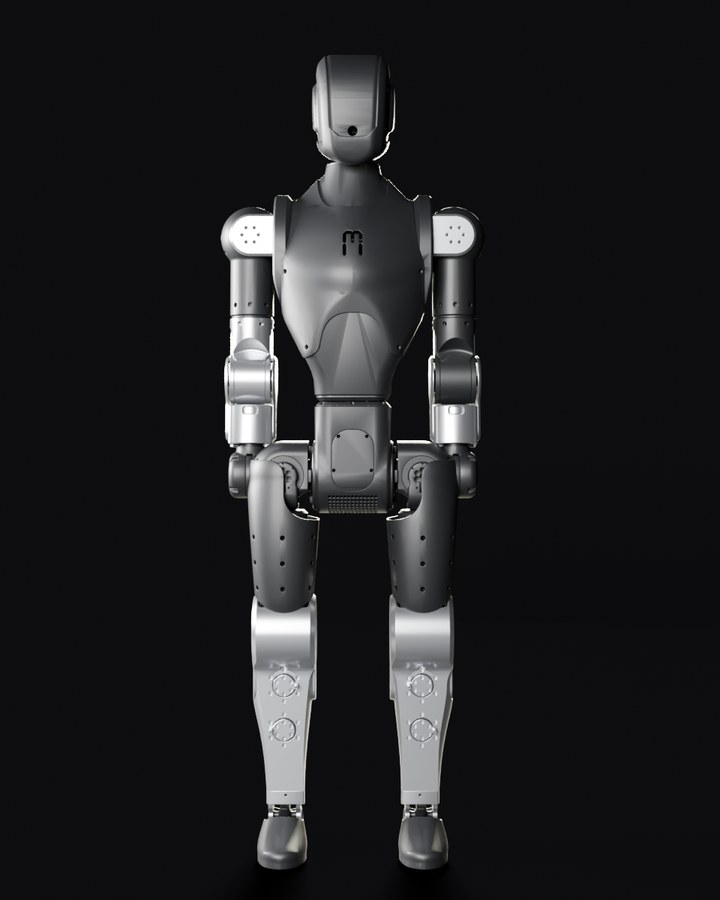
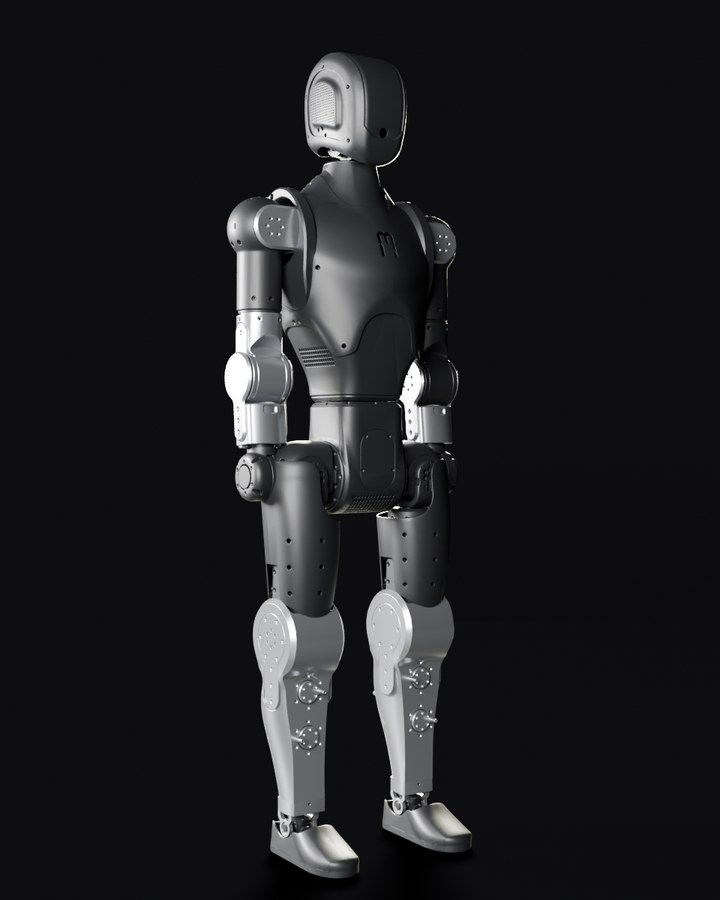
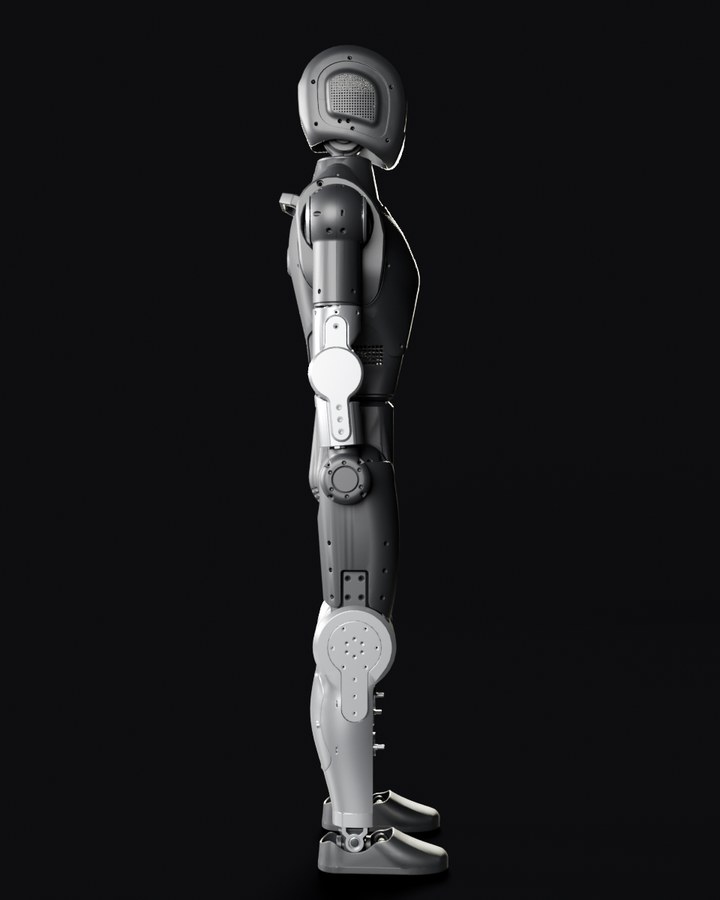
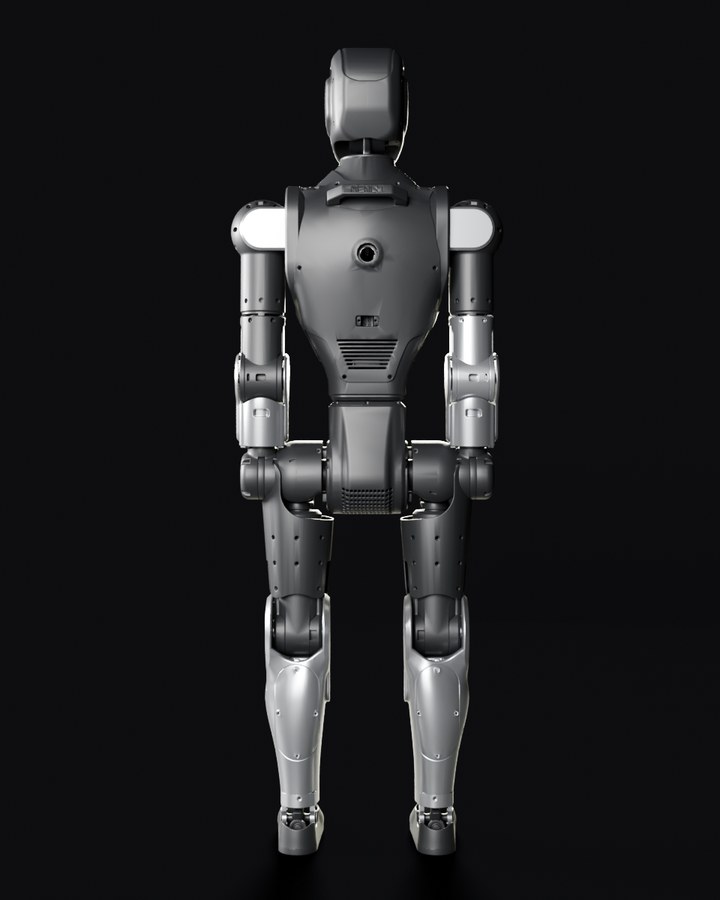
Buyers receive the parts unassembled, together with an assembly manual and build videos (official manual). Menlo estimates around 20 hours of total assembly time, and its assembly and servicing partners are in the US and Singapore (Menlo FAQ).
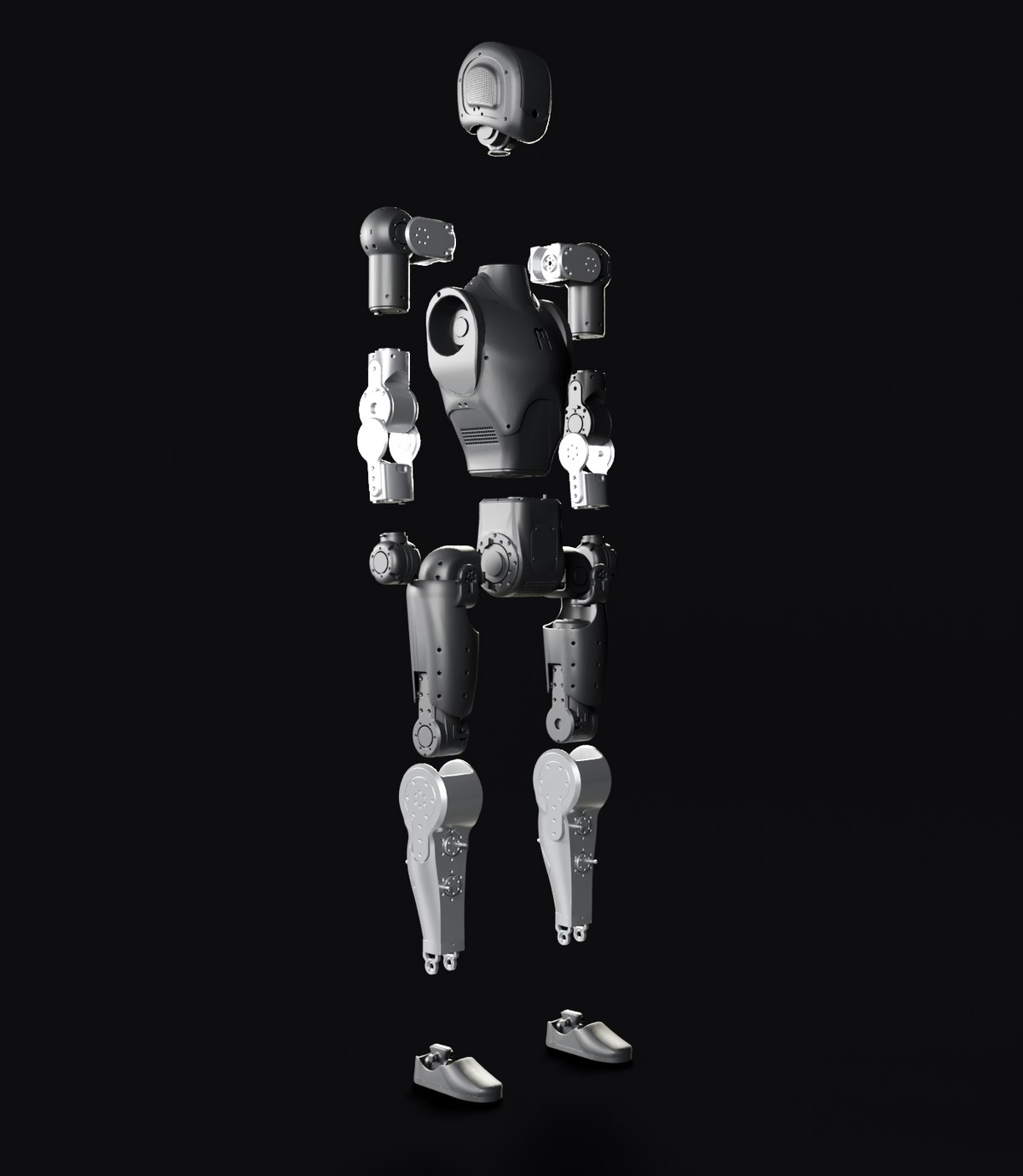
What sets it apart from commercial robots is the licence: CERN-OHL-S-2.0 for the hardware and GPL-2.0 for the software in the same GitHub project. Anyone who does not want the kit can source the parts from the published bill of materials and have them made locally.
Explainer | What the open-hardware licence means
Asimov 1's hardware is released under CERN-OHL-S-2.0, an open-hardware licence published by CERN, the European Organization for Nuclear Research. The S stands for strongly reciprocal.
Anyone may study, modify, manufacture and even sell the design; but whoever distributes the design files, or products made from them, must provide the complete design source (the modified version, if changed) under the same licence, either to the recipient or at a stated download location. Strongly reciprocal means that if it is folded into a larger design, the whole design falls under the same licence. The GPL-2.0 used for the software works in the same spirit: a changed version that is distributed must also be GPL-2.0, with its source code.
TEARDOWN
Of 100 custom part numbers, 57 are already 3D printed
We downloaded the published mechanical design files for Asimov 1 and counted them by the project's own naming convention, one part number each. There are 100 part numbers to make: 39 MJF-printed PA12 nylon parts, 18 SLM-printed (laser powder-bed) 316L stainless parts, and 43 machined parts (39 in 7075 aluminium, 4 in stainless steel), plus 67 bought-in items such as motors.
The list is, in effect, a manufacturing work order. The parts are published as 3D files, so the buyer chooses who makes them and where. The team already sends close to six in ten parts to 3D printing, including 18 metal parts, which tells you they see no need for tooling on those parts.
We also estimated the bounding box of each nylon part from the 3D files. 38 of the 39 have a longest side within 330 mm; the largest, the torso shell, is about 38 × 25 × 22 cm.
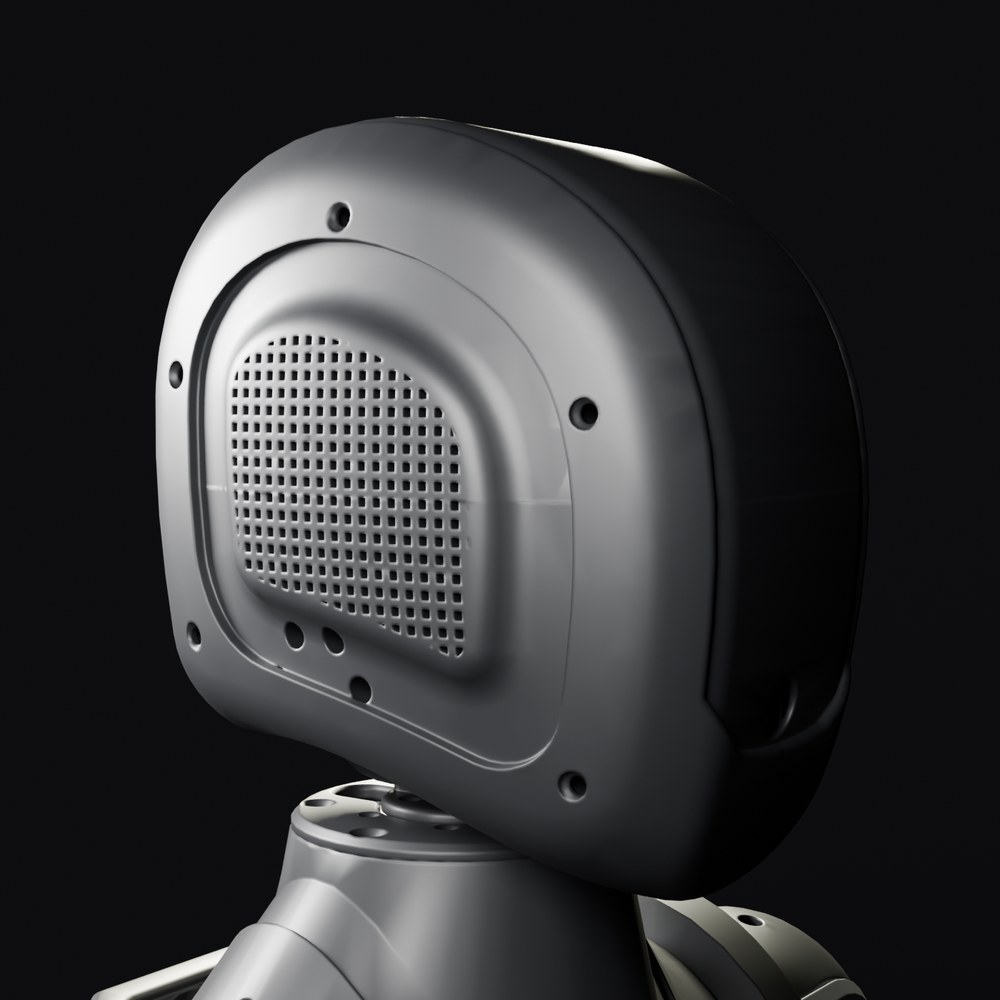
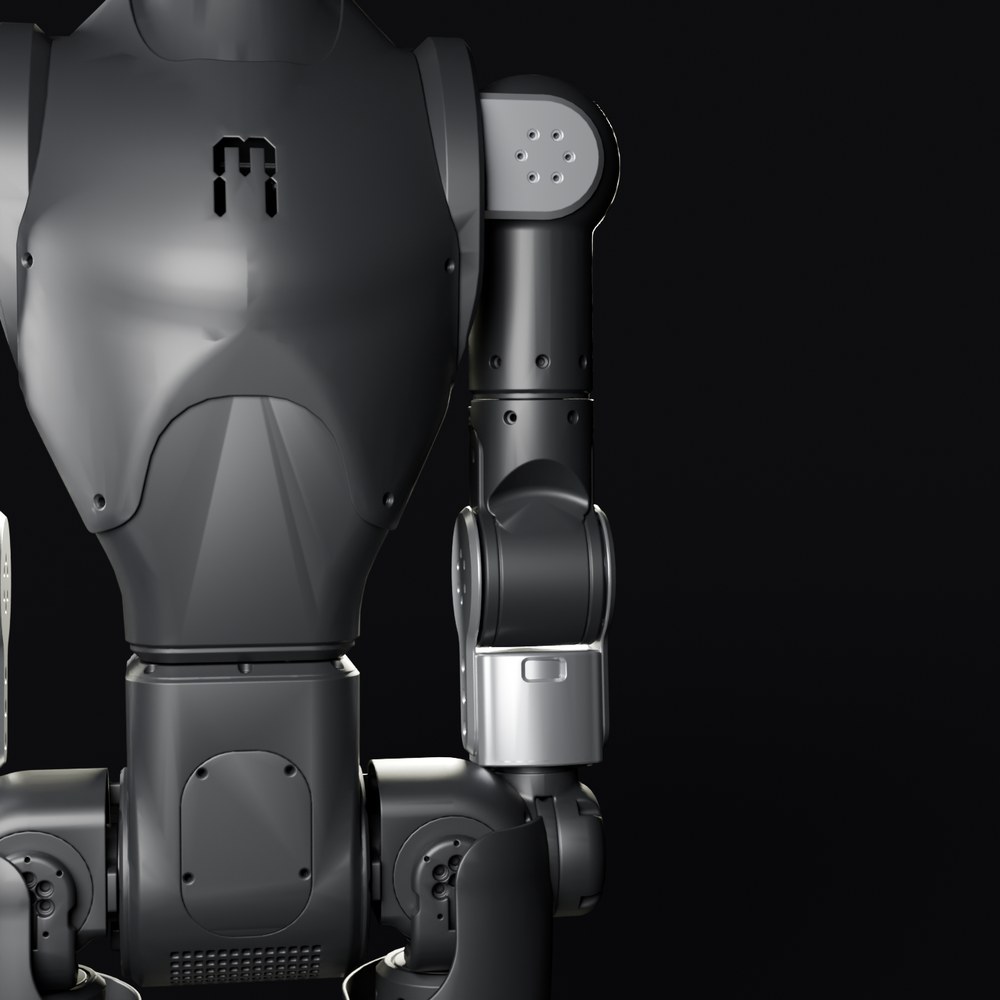
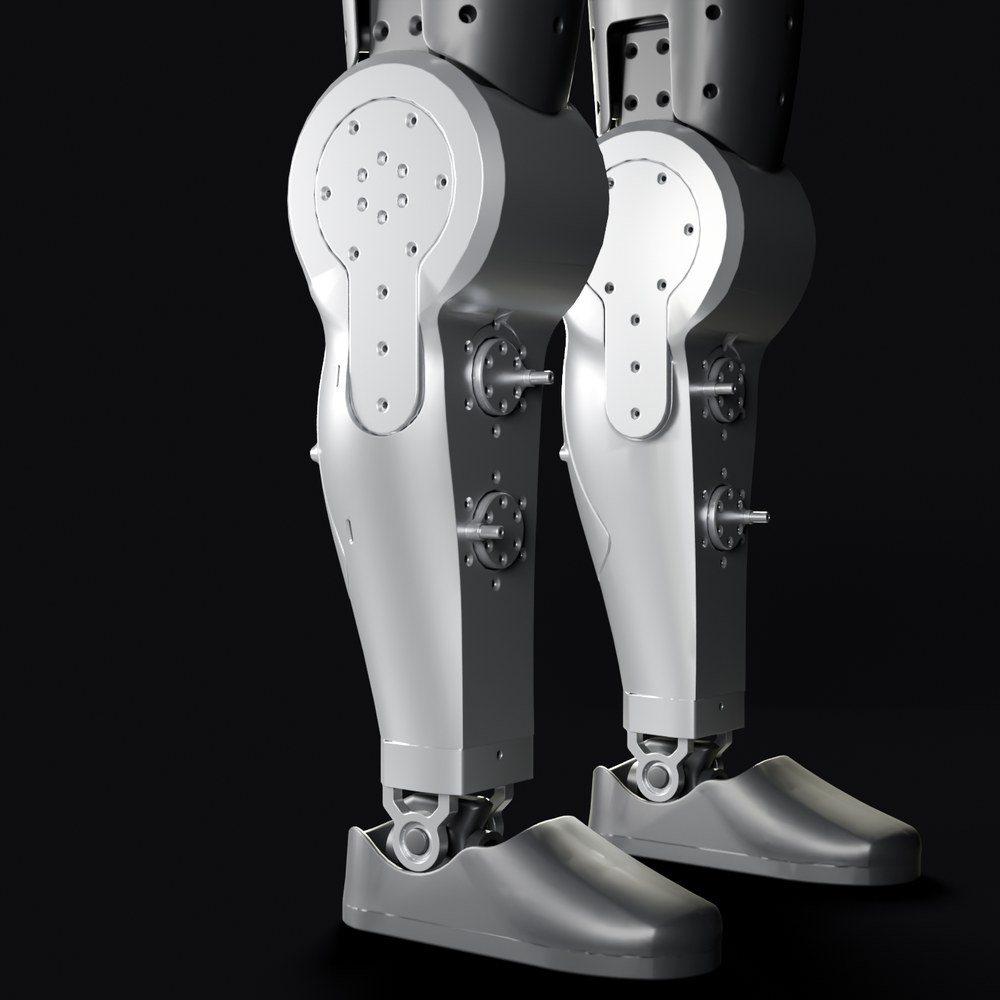
Up close, the division of labour shows. The shells, full of curves that must look good and hold the wiring, and the feet are MJF nylon; the brackets that hold the motors inside the joints are machined aluminium or SLM-printed stainless steel.
Explainer | MJF nylon versus continuous-fibre printing
MJF (Multi Jet Fusion) is HP's powder-bed fusion technology. Each layer starts as a thin spread of PA12 powder; print heads jet a fusing agent where the part should be, and infrared heat fuses that area. The surrounding powder supports the parts, so no support structures are needed and many small parts can be packed into one build.
Markforged takes a different route. One nozzle extrudes Onyx to build the shape; a second lays continuous carbon fibre strands into selected layers. Which layers get fibre, and along which path, is set in Eiger, which puts the strength where the load is.
STRENGTH
A new head is easy. The load-bearing parts are the test
The printed head in the video is a cosmetic part; any material will do. On Asimov 1 the nylon parts are mostly shells, but they include the feet, which carry the whole robot; the aluminium and SLM stainless parts hold the motors and take the load. If you make these parts in your own plant, printing the shape is only the start; the part has to hold, and moving from MJF to extrusion printing means rethinking orientation and supports.
Markforged works in two steps. The base material, Onyx, is a micro carbon fibre filled nylon: in strength it is in the same range as engineering nylons, and against Markforged's plain nylon it is far stiffer and more heat resistant, with a tensile modulus of 2.4 versus 1.7 GPa and a heat deflection temperature of 145 versus 41°C. Where a part carries load, continuous carbon fibre is laid along the load path; on Markforged's published datasheet, unidirectional, fully filled continuous carbon fibre test specimens reach 800 MPa tensile strength and a 60 GPa tensile modulus (ASTM D3039, Markforged composites datasheet).
For a robot like Asimov 1, the first suits shells and general brackets; the second makes some of the brackets now machined from aluminium worth a test. Whether a printed part can replace one is settled under real load, not on a datasheet.
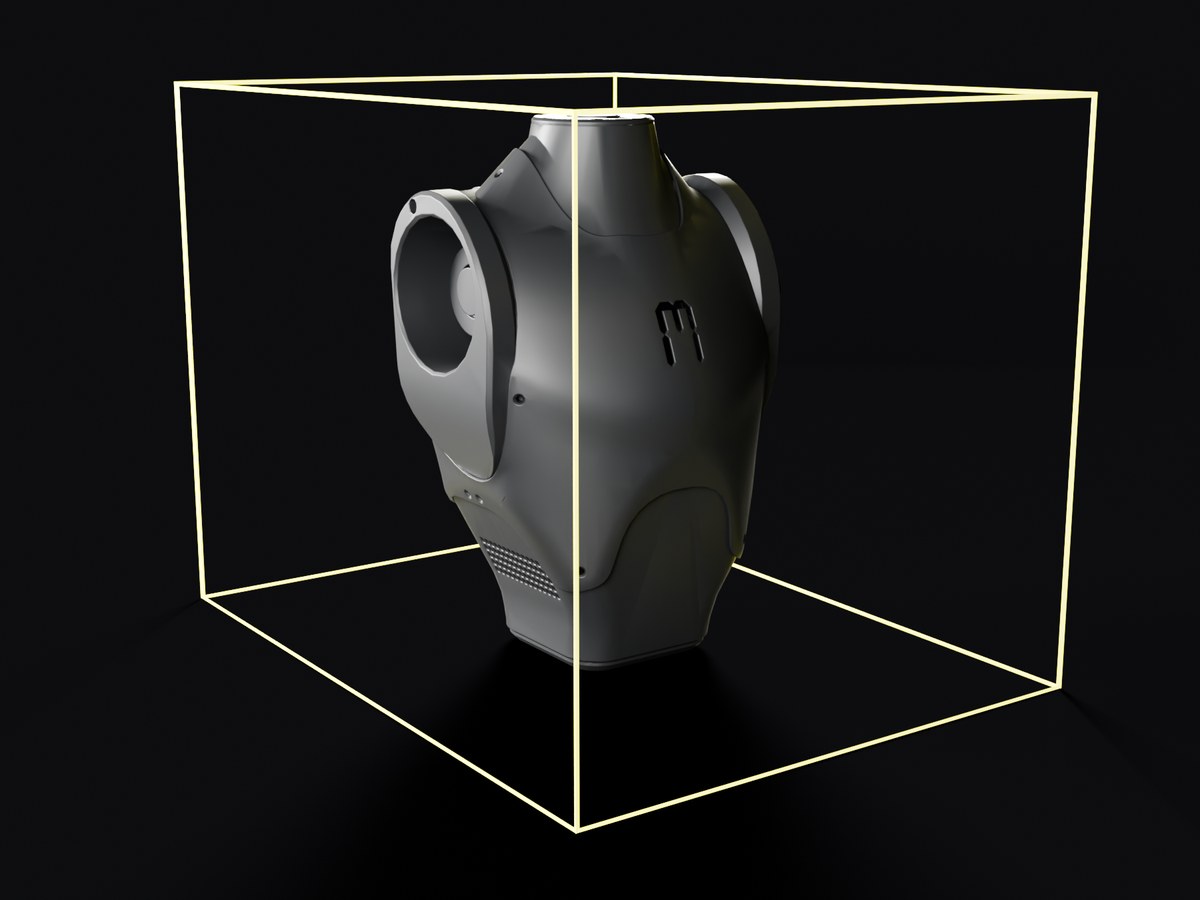
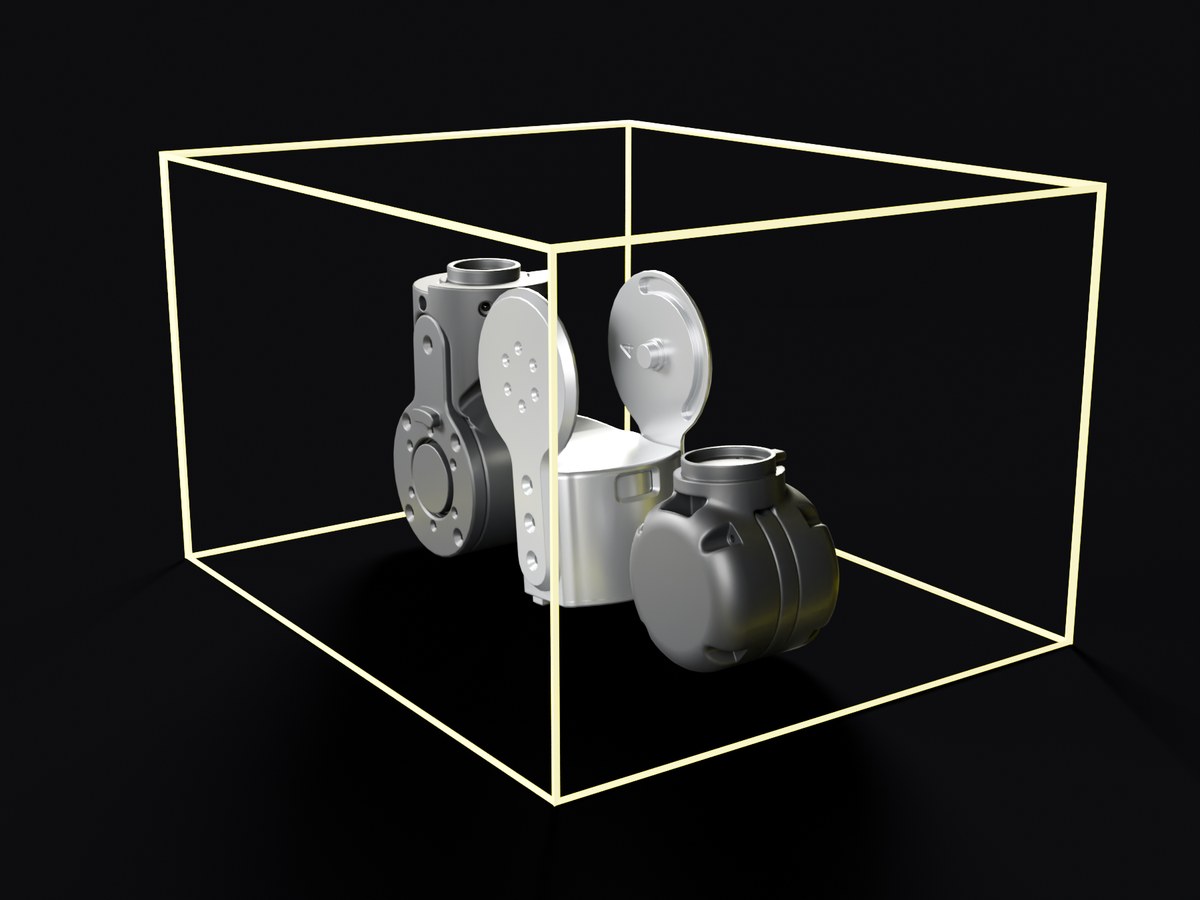
On size, most of the nylon parts fit the X7 (build volume 330 × 270 × 200 mm); a large part such as the torso shell fits the FX20 (build volume 525 × 400 × 400 mm single-nozzle, 500 × 400 × 400 mm multi-nozzle). A design change needs no new mould and no new machining set-up, only a new file.
For an open robot that people are building and modifying all over the world, the same file producing the same part wherever it is printed matters as much as the cost per part. Markforged's Eiger software manages part files and print settings centrally, so the same printer model and material can repeat the same settings.
There is a route for the metal parts too. The FX10 with the Metal Kit prints 316L stainless steel (washed and sintered after printing), so the 18 stainless parts Asimov makes by SLM can be evaluated in house as well; the two processes differ, so strength and dimensions need their own validation.
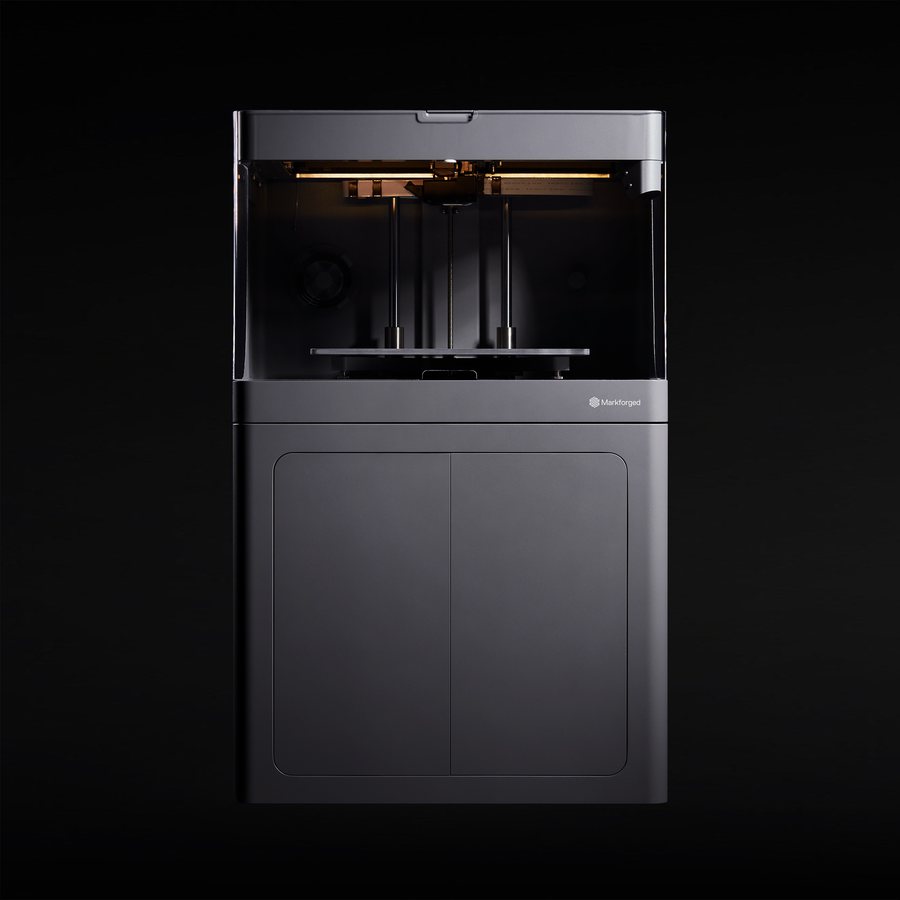
- Build volume 330 × 270 × 200 mm
- For: most nylon parts, brackets, fixtures
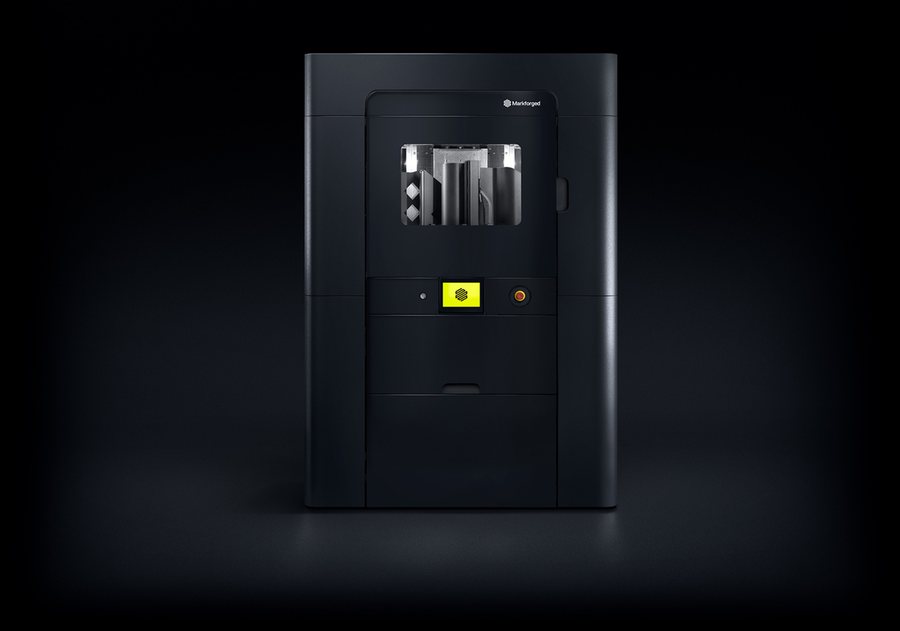
- Build volume 525 × 400 × 400 mm (single nozzle)
- For: large parts such as the torso shell
CASE
Kojima Industries: printed robot hands, part cost down 67%
Kojima Industries is a Japanese automotive parts manufacturer. The robot hands on its production lines used to be made of metal, and the heavier the hand, the larger the robot it needed, which pushed up equipment cost.
After moving to Markforged printing, the cost of making the hand parts fell 67% compared with conventional machining, and lead time went from 14 days with an outside machine shop to 1 day printed in house. Design hours also fell by about 30% for some parts, because outsourced machining needs 2D drawings while printing works straight from the 3D file (Markforged case study).
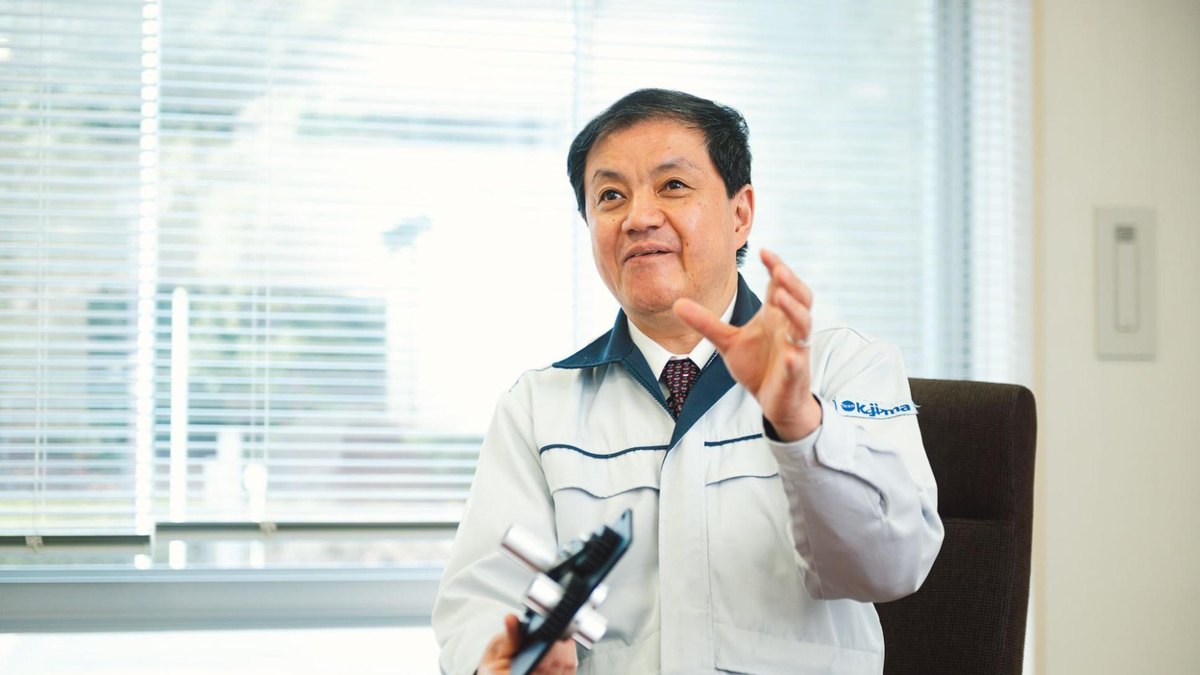
A humanoid's arm and a production-line robot hand run the same arithmetic: every gram taken off the end is load the motors and structure no longer carry.
Explainer | Why a lighter end saves the motors
A shoulder holding up an arm is resisting torque: the weight multiplied by the horizontal distance from the shoulder to the centre of mass.
With the arm held out level, weight near the end sits furthest from the shoulder, on the longest lever, so a kilogram at the hand takes more torque to hold than the same kilogram at the upper arm. Every gram removed from the end is torque the shoulder and elbow motors no longer have to produce, which is the same reason production-line robot hands are made lighter.
If you build robots or automation equipment, or have an Asimov 1 on your bench, run the parts list through three filters: parts that get revised, parts made in small numbers, and parts with an outsourcing lead time measured in weeks. Pick one and print it.
The test is simple: a part whose weight is close to the load limit, or one that takes two weeks or more to come back from a supplier, is worth the comparison.
Bring one of your parts and see it printed
A one-to-one demonstration by Markforged engineers, prepared around your parts and loads; available in Taiwan, China, Hong Kong, Vietnam and online.
Book a live demo →- Menlo Research: Asimov 1 product page
- Asimov 1 official manual
- Asimov 1 open design files (GitHub, incl. specification and fabrication categories)
- Menlo Research: company page
- Instagram: Asimov 1 video
- Markforged FX10
- Markforged composites material datasheet (REV 5.3)
- Markforged X7
- Markforged FX20
- Markforged Eiger software
- Markforged case study: Kojima Industries robot hands
- Markforged media hub: Kojima Industries case
Part counts follow the fabrication category of each sub-assembly in the official mechanical/ASV1 design files. Sizes are our bounding-box estimates from the vertices, surface control points and arcs in the public STEP files, checked against an official drawing (ASV1_100_05A, 5.00 mm thick); as an upper bound we also measured the whole torso link in the official simulation-model mesh at 382 × 250 × 219 mm. Three parts at 310–320 mm sit close to the X7 limit and need a layout check.