Greater China & Vietnam Newsroom
News & Insights
Language繁體中文简体中文English
Weekly feature · Industry perspective

From R&D to service: where automotive puts 3D printing to work

In automotive, 3D printing is worth far more than prototypes. Markforged breaks it into three stages, iterating in R&D, producing on the line and serving in the field, with value that scales from Tier 3 suppliers to OEMs. This week we walk through each stage with eight Markforged cases.

2026.11.11 | Automotive | Editorial

The Markforged view: three stages of value

The fixtures and tools automotive lines print most

From Markforged automotive industry material

01Assembly jigs and fixturesDoor alignment · Dashboard positioning · Seat mounting · Wiring harness routing · Windshield and bumper installation
02Inspection fixturesPanel gap and flushness gauges · Go/no-go gauges · Hole location checks · Weld bead inspection
03Manufacturing aidsRobot end-of-arm tooling · Vacuum grippers · Conveyor guides and diverters · Sensor brackets · Masking and painting tools
04Welding and bonding fixturesSpot welding guides · Adhesive curing fixtures · Seam sealing guides
05Maintenance and repair toolsCustom spanners and wrenches · Engine lifting brackets · Brake rotor alignment jigs · Transmission alignment tools
01
Iterate Better.

R&D: faster iterations, bolder designs

In R&D, waiting is the most expensive part. Every few weeks spent waiting on an outsourced low-volume part is a few fewer design rounds. Bring printing in-house and each iteration is measured in days, not weeks.

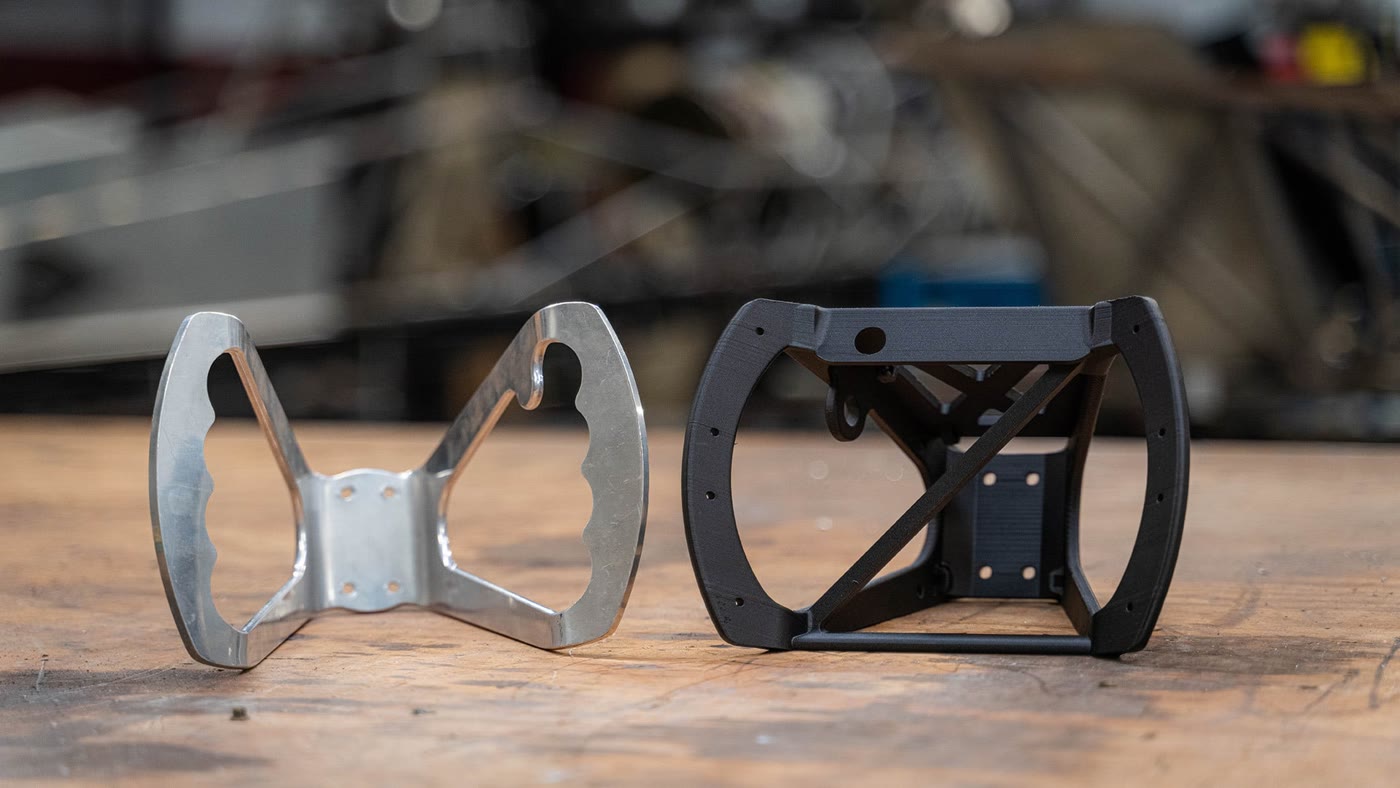
The original aluminum steering wheel and the 3D printed composite one
X7Material: Onyx (prints on FX10)

Larsen Motorsports: a steering wheel fitted to one driver, in 2 days instead of 8

Jet dragster racing · U.S.

A jet dragster runs at 280 mph, and its off-the-shelf butterfly steering wheel is built to standard hand dimensions, so driver Josette Roach could not reliably reach critical controls. The team printed a fitted wheel on an X7, with Onyx as the base and continuous carbon fiber laid along the load paths, cutting part lead time from 8 days to 2. In real-world testing it was stiffer than the aluminum original, which flexed under load. Simulation software predicted the loads up front, so the team did not need to print ten intermediate versions to find the failure point.

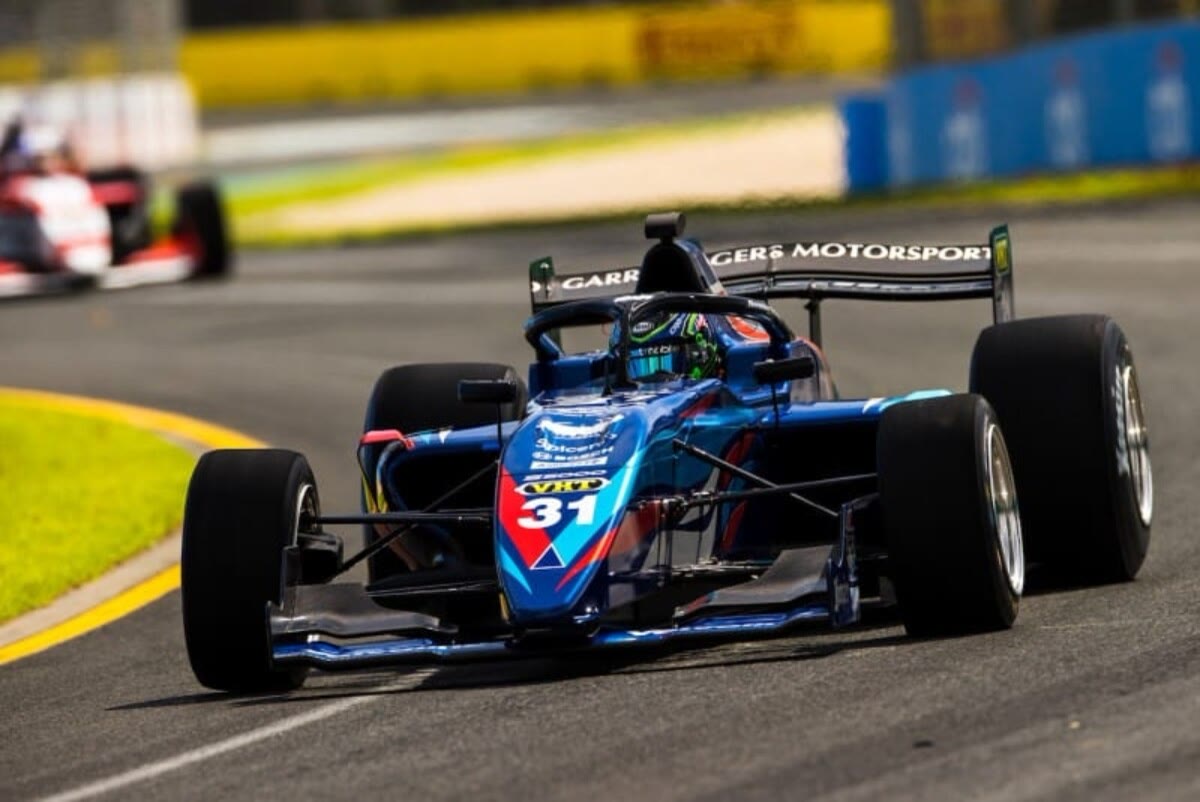
A Garry Rogers Motorsport race car
Markforged platform

Garry Rogers Motorsport: a brake duct pattern in 24 hours instead of two weeks

Racing team · Australia

Australia's oldest motorsport team has no CNC machining, so low-volume complex parts used to be outsourced. Complex shapes suggested by the engineers' CFD software cost money and two weeks each time. With Markforged carbon fiber printing, a brake duct pattern for a fiberglass mold went from AUD 1,000 (about USD 670) and two weeks to AUD 75 (about USD 50) and 24 hours. Around half or more of what the team now prints is end-use, including door lock covers, gearbox housings, steering wheel handles and camera mounts.

2 weeks → 24 hoursRead the original →
02
Produce Better.

Production: tooling without the wait, and less downtime risk

What holds up a line is often not the equipment but the fixtures and tooling. Outsourcing means two or three weeks each time, and a spec change starts the clock again. Make fixtures in-house and a revision can be on the line the same day.

Film: Volkswagen Autoeuropa (English narration, about 100 seconds, English subtitles: Markforged Greater China and Vietnam) | Public version (YouTube)
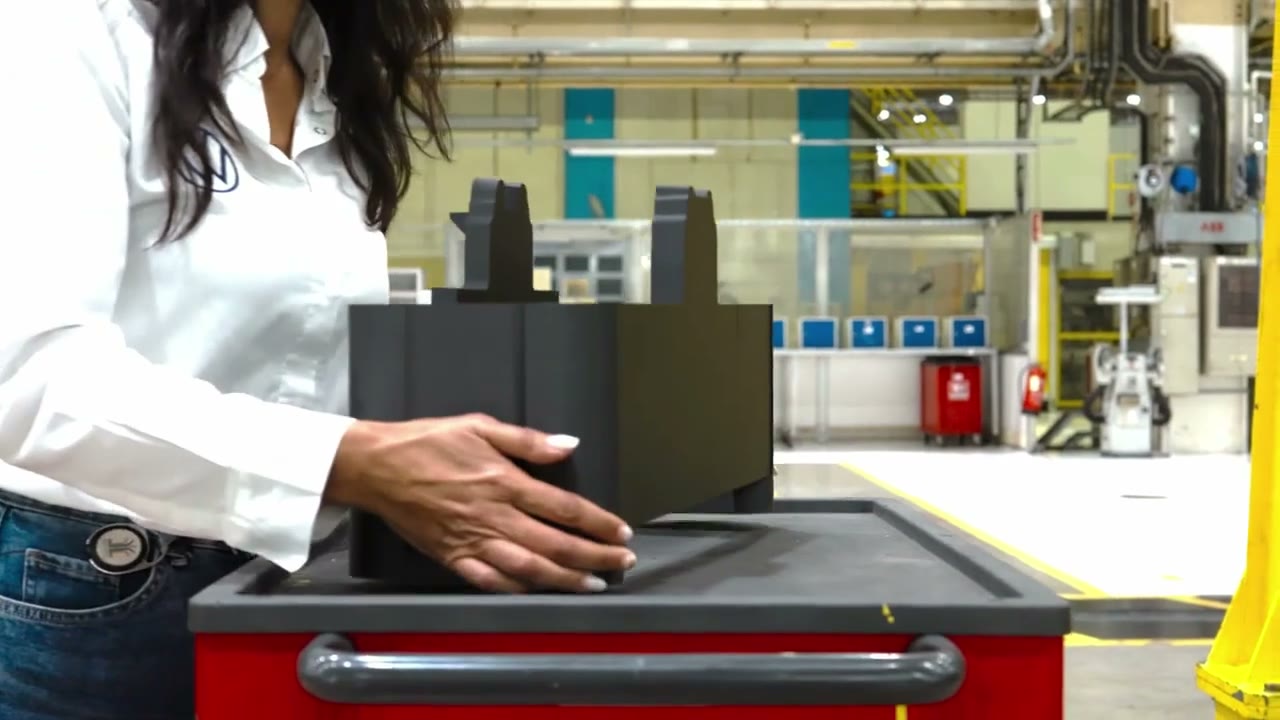
A die lifter in the Volkswagen Autoeuropa stamping area
Markforged platform

Volkswagen Autoeuropa: die lifters cut from 60 kg to 4 kg

Vehicle plant · Portugal

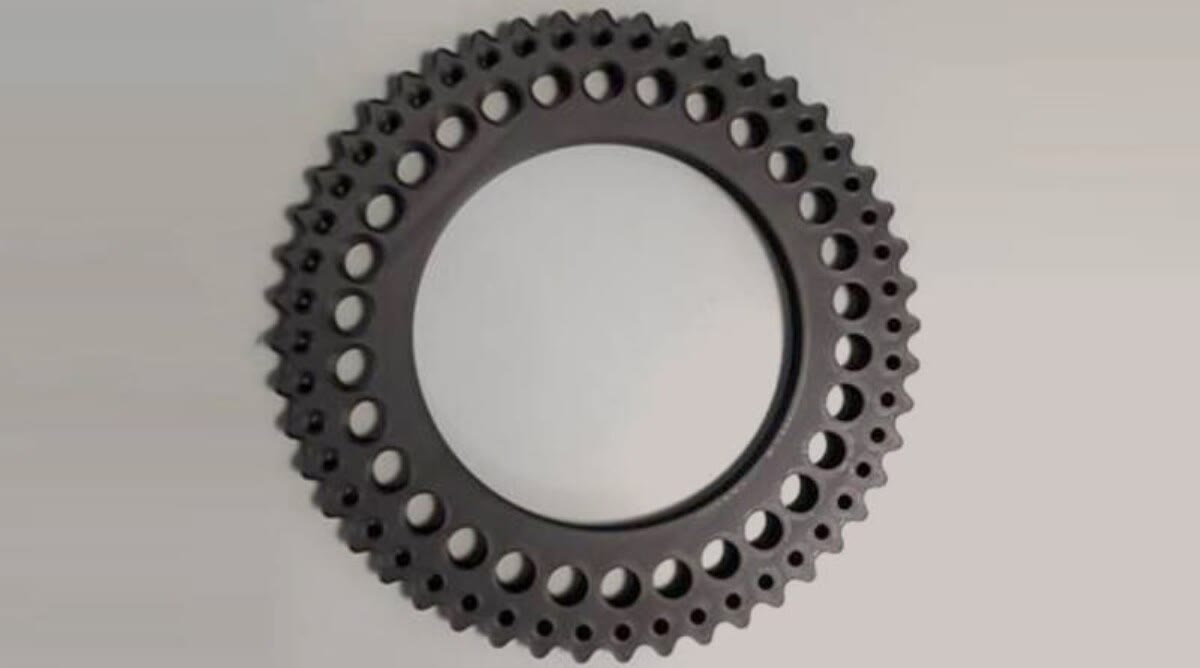
Volkswagen's Palmela plant in Portugal introduced 3D printing in 2014 and continuous carbon fiber printing in June 2024. The first success was in stamping: die lifters went from 60 kg to just 4, improving ergonomics, efficiency and sustainability. It has since spread to a Y-connector for pipes in the body shop, a chemically resistant high-tension ring for paint shop robots and a universal tray in logistics, ready to be transferred across the Volkswagen Group.

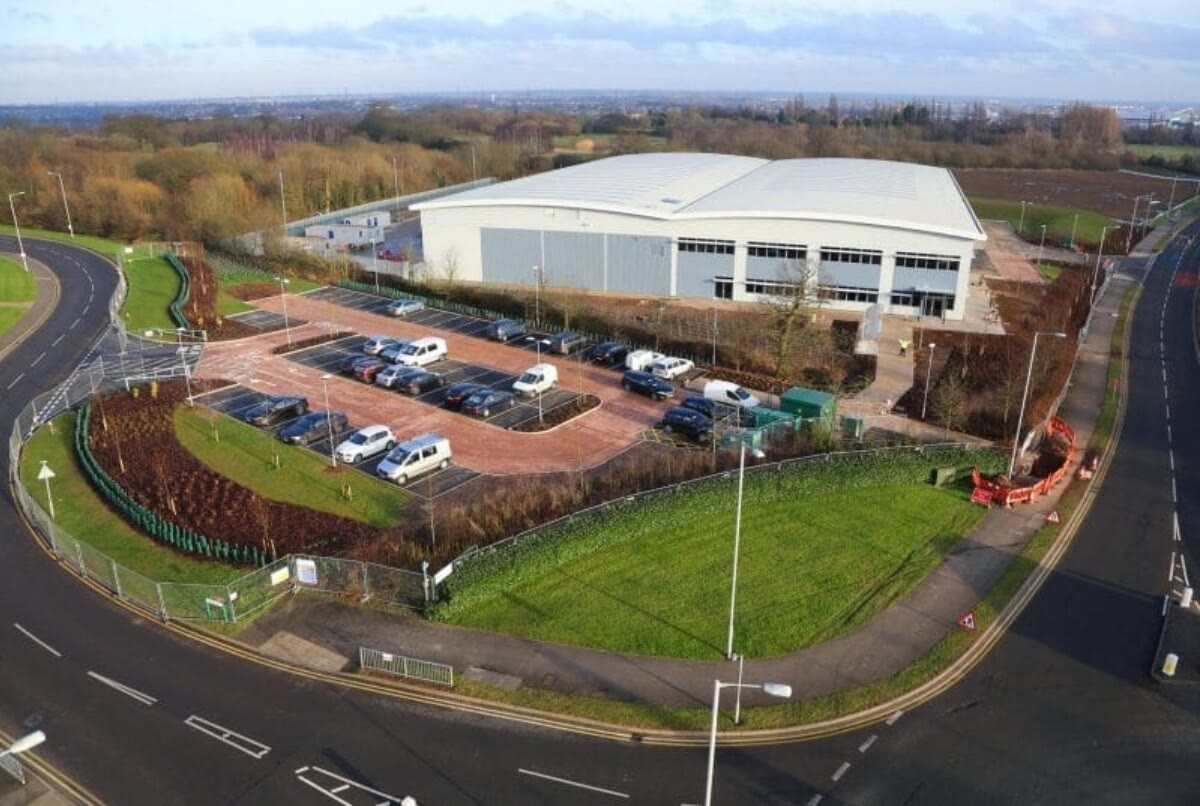
Dunlop Systems and Components site
Markforged platform

Dunlop Systems and Components: more tooling in six months than in the previous five years

Automotive components · U.K.

U.K. automotive component maker Dunlop used to outsource internal and customer tooling, waiting two or three weeks each time, only for the customer to change the spec. Printing its own tooling in Onyx and continuous carbon fiber on Markforged, the team produced more tooling in six months than in the previous five years and saved tens of thousands of dollars; when it helped build an electric vehicle for a large automaker, the custom tooling was printed in-house too.

6 months > 5 yearsRead the original →
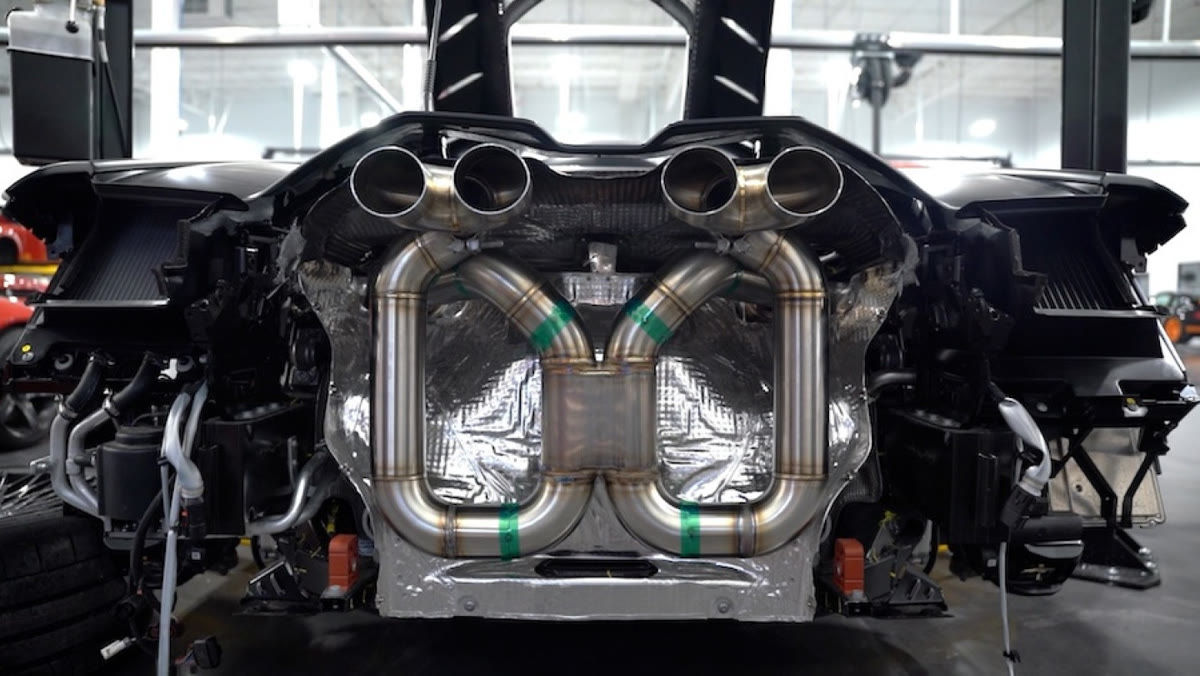
GRP's X-pipe exhaust for a Lamborghini Revuelto
FX10

Graham Rahal Performance: fixtures printed overnight instead of 20–40 hours by hand

Supercar fabrication · U.S.

Supercar fabricator GRP prints composite and metal fixtures on the FX10: designed in CAD, printed overnight, used the next day, reclaiming hundreds of hours once spent hand-building fixtures.

20–40 hrs → overnightRead the original →
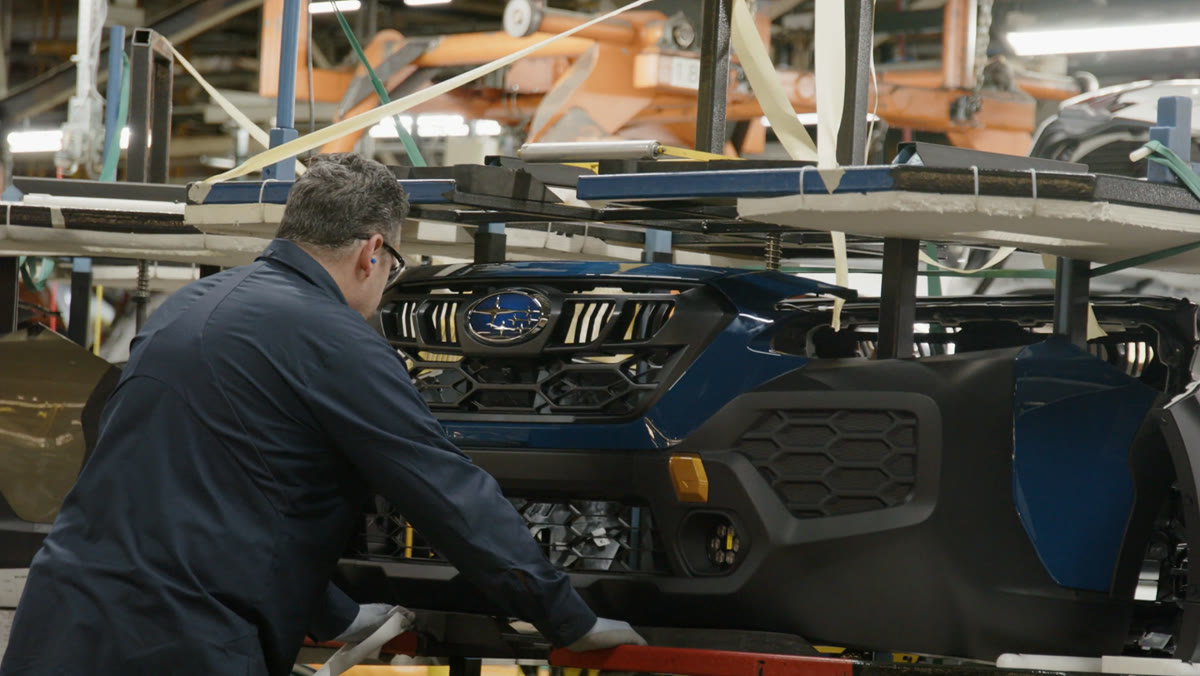
Assembly line at Subaru of Indiana Automotive
Printer not statedMaterial: Onyx GF (prints on FX10)

Subaru of Indiana: telling jigs apart by color on a mixed-model line

Vehicle assembly · U.S.

Several models share one line and their jigs differ by millimeters. Printed in six-color Onyx GF, each model gets its own color, so operators grab the right tool on the first pass; the bumper QR-label jigs hold 0.1 mm.

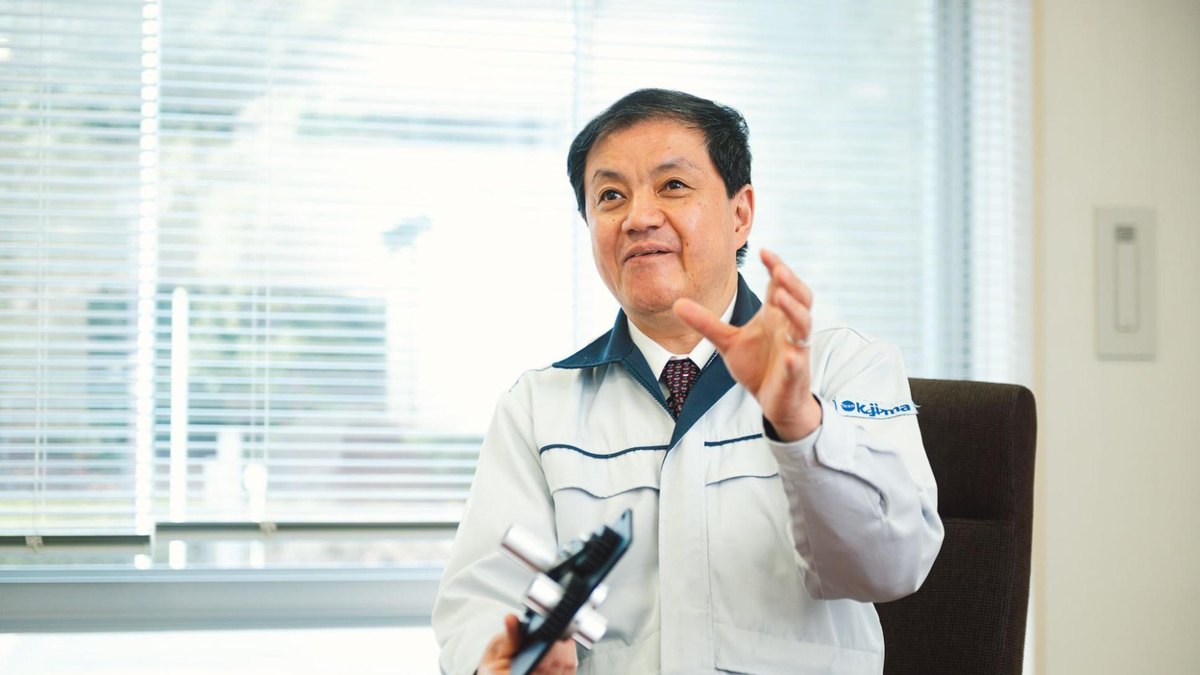
Robot hands 3D printed by Kojima Industries
Markforged platform

Kojima Industries: in-house robot hands, lead time from 14 days to 1

Automotive components · Japan

Aichi-based automotive component maker Kojima Industries prints its robot hands in-house on Markforged. The hands keep the strength the line needs while losing weight, so robots no longer have to be oversized. Part cost fell 67% and lead time went from 14 days to 1.

−67% / 14 days → 1Our full story →
03
Service Better.

Service: replacement parts made close to where they are needed

The Markforged view is to turn service into a competitive advantage: make replacement and service parts where they are needed for faster repairs. That only works if designs and print settings stay in sync between sites, so every site prints the same part.

Composite workholding fixture printed by Dana
X7

Dana: one set of designs and print settings, shared across seven countries

Drivetrain and power systems · Global

Dana, a mobility supplier with more than a century of history, runs Markforged printers in seven countries and uses the cloud-based Eiger platform to share CAD designs, print settings and production data between engineering hubs, so each site prints tools and parts where they are needed. Composite fixtures printed on an X7 at its Rovereto, Italy engineering center ran for over a year without failure, at 70% lower cost and 90% shorter lead time per fixture.

7 countries, in syncRead the original →
Country Manager's Viewpoint

AI is improving how cars are designed and built. What does Markforged industrial additive manufacturing give customers?

Brian Chen
Brian ChenCountry Manager, Greater China and Vietnam, Markforged

AI has made automotive design faster, but your factory has not necessarily kept up. Design software can propose several new shapes overnight, yet turning one of them into a physical prototype, fixture or mold still means an outside supplier and a two- or three-week wait at many plants. Every step faster on the design side adds another round of waiting.

Case · Garry Rogers Motorsport

Garry Rogers Motorsport shows the gap clearly. Australia's oldest racing team has no CNC. When its engineers reshaped a brake duct based on CFD simulation, every change meant outsourcing a new fiberglass mold pattern: AUD 1,000 and two weeks. Printed in carbon fiber on Markforged, the same pattern took 24 hours and AUD 75. For the first time, the shop could make parts as fast as the simulation could suggest them.

Pattern lead time2 weeks → 24 hours
Pattern costAUD 1,000 → 75
Three advantages
01Speed

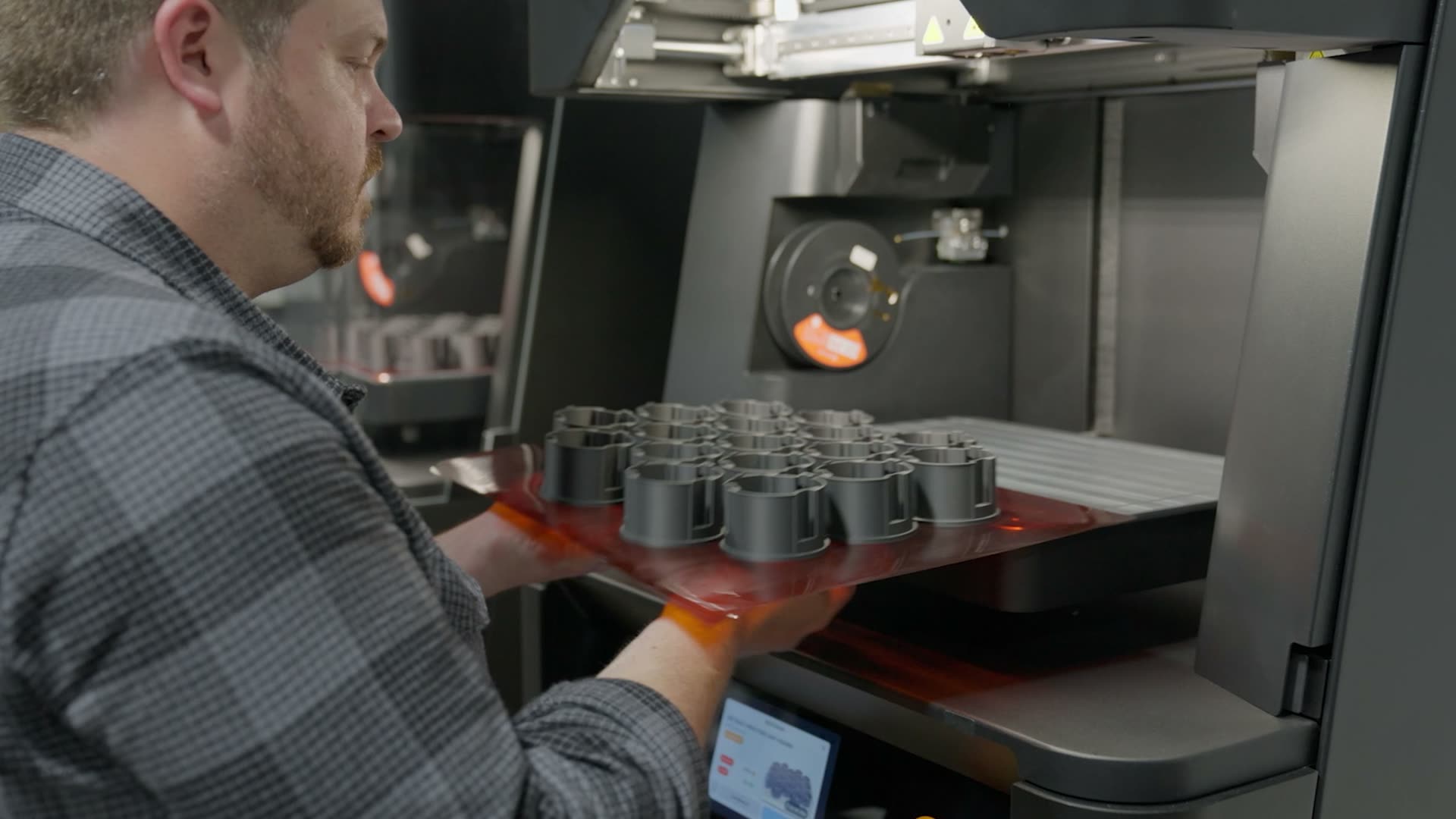
Speed is only the first advantage. Automotive plants need fixtures and parts that go on the line, not models to look at. Continuous fiber reinforcement is Markforged's patented technology: carbon fiber is laid continuously along the load path, so the strength is built into the part. FX10 puts composites and metal in one machine; with the Metal Kit it also prints 17-4PH and 316L stainless steel and H13 tool steel, right on the factory floor. Draw it in CAD, print it overnight, use it the next day.

A full tray of printed parts coming out of FX10 (Markforged video still)
02Data

The second advantage is data. For AI to improve production, physical parts have to become data as well. Markforged Simulation validates part performance and optimizes print settings before printing; FX10 scans the part with a laser micrometer as it prints, and Inspection verifies the dimensions, so every part comes off the printer with a measurement report. Each step from design to validation to measurement leaves data that can feed the next design round.

Design
↓
Simulationvalidate before printing
↓
FX10 laser micrometerscan while printing
↓
Inspectionmeasurement report
↺ Feeds the next design round
03Replication

The third advantage is replication. Eiger is a cloud platform that keeps design files, print settings and the part library in one place. Dana shares the same designs and parameters across sites in seven countries and prints fixtures and parts locally when they are needed. A method proven in one plant can go straight to another without starting over.

A method proven in one plant
↓
Eiger clouddesign files · print settings · part library
↓
Sites in seven countries (Dana)

If your lines in Taiwan, China, Hong Kong or Vietnam are still waiting on outsourced fixtures, start with one part. Pick the fixture that takes the longest and changes most often, send us the drawing, and we will print it on FX10 and measure it. The test is simple: it goes on the line the next day, and the measurements match the drawing.

Send us a drawing →
Our take

Three questions for manufacturers in Greater China and Vietnam

  1. How long does an outsourced fixture take today, and how long again after a spec change?
  2. Which parts stop the whole line when they fail, and do you have design files for them?
  3. Could your service and repair parts be made at the site closest to the customer?

Adopters listed on the Markforged automotive page include Bentley, Porsche, Toyota and Harley-Davidson. See the automotive industry page →

Start with one fixture.

Send us a part or fixture file and we can arrange a test print and a live FX10 demonstration, and quote it. Tell us your industry, what it does, the material you have in mind and where you are: Taiwan, China, Hong Kong or Vietnam.

Want more FX10 results? See nine Markforged cases on the FX10 page →

Further reading: the automotive e-book (PDF, 20 pages) →

Brian Chen
Your contactBrian Chen
Country Manager, Greater China and Vietnam, Markforged
For FX10 demos and quotes in Taiwan, China, Hong Kong and Vietnam, reach me directly.
brian.chen@markforged.com

Further reading