
News & Insights
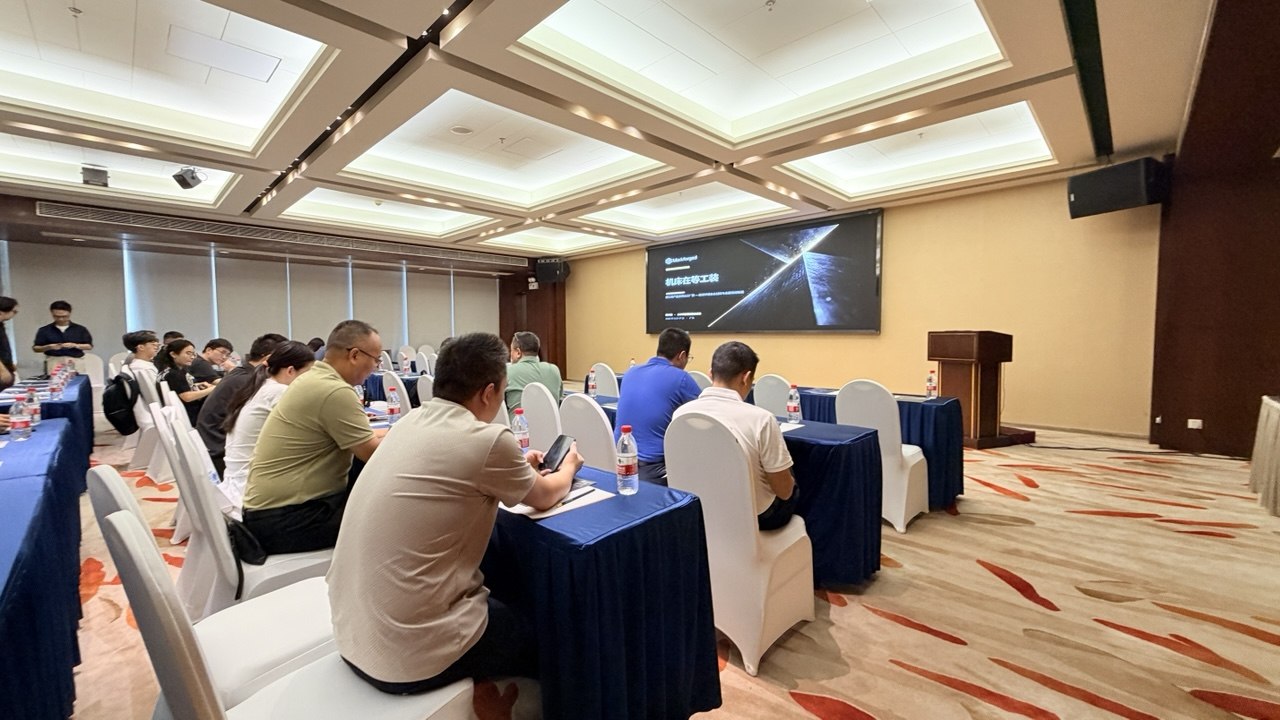
waiting on tooling
Brian Chen, Country Manager for Greater China and Vietnam, put the argument in one line: for most shops the real lead-time bottleneck is not the machine tool but the queue of tooling in front of it — fixtures, jigs, soft jaws, gauges and poka-yoke plates. The orders are in and the machines are there, yet the tooling is still waiting at an outside shop.
Ten published cases, a tensile test on video and a table of sample parts all answered the same question: why printed tooling can be trusted on a production line.
The real bottleneck is not the machine tool. It is the queue of tooling standing in front of it.
Brian Chen's argument as reported · Country Manager, Greater China & Vietnam
Market
Three growth curves at once, and the pressure lands on tooling
Market estimates cited at the forum put the global additive manufacturing market at about USD 37.6 billion in 2026, growing at a compound annual rate of 23.9%, with end-use production parts having overtaken prototyping as the largest application. China is the fastest-growing market within that, forecast at 27.1% CAGR.
In South China specifically, Chen pointed to three sectors now scaling: the low-altitude economy and UAVs, humanoid robotics, and exports of 3D printing equipment. What they share is the revision cycle — a model changes every three to six months, while cutting a steel mould takes months. Keep up with the customer's revisions, he argued, and you win the orders others cannot take; the pressure from all three curves ends up on tooling.
He raised a second, structural problem: the handover of skills. Chen noted that he grew up in central Taiwan — Changhua and Taichung, where the CNC lathe industry took root — and that skilled lathe operators are now hard to find because young people are not entering the trade. Falling birth rates and the skills gap are not local phenomena, while part complexity and delivery expectations keep rising.
Technology
Continuous fibre and in-process laser metrology: the two preconditions
Chen separated Markforged from general 3D printing across three layers: materials, machines and software. The material layer rests on Continuous Fiber Reinforcement (CFR): chopped fibre blended into pellets helps only marginally, whereas Markforged lays continuous strands right through the part. His analogy for the room: the Onyx base — nylon reinforced with micro carbon fibre — is the concrete, and continuous carbon fibre is the rebar; only together do they carry load. Beyond carbon fibre the line includes fibreglass and Kevlar, plus certified materials for electrostatic discharge, food contact and flame retardancy, covering electronics, food lines and aerospace.
On machines, the best seller in China is the FX10, which switches between composites and metal in one system, with 17-4 PH, 316L, H13 tool steel and copper in metal mode. The FX20 handles higher temperature materials and larger parts; the X7 and X7 Field Edition cover the production line and the resource-constrained site. Metal parts follow three steps — print the green part, wash and debind, then sinter. Supports use a release material that is removed by hand after sintering, avoiding the cutting, grinding and polishing that metal printing normally demands, and shrinkage compensation is calculated by the software rather than scaled by the engineer.
The software layer is the Eiger cloud platform: it runs in a browser with nothing installed locally, and an offline deployment is available. Strength and orientation can be simulated before printing; during printing a laser scans and measures, holding the first part and the thousandth to the same tolerance and producing a traceable report that records operator, time and version. Markforged holds ISO/IEC 27001:2022 certification, audited by a third party rather than self-declared. For a mould shop, Chen noted, the files are worth more than the machines — ask what guarantees the vendor can show before handing them to a cloud.
Cases
Ten published cases, from satellites in orbit to hobbing-machine spares
Ten published cases carried the argument, spanning satellite structures, aerospace parts, robot grippers, semiconductor equipment tooling, the mould and cutting-tool trade itself, and line tooling and spares. Sidus Space has 3 LizzieSat satellites in orbit with printed structures, including 52 weeks of external exposure on the International Space Station and 0 measured degradation. Dixon Valve cut robot gripper jaws from USD 290 to USD 9 per part, a 96% reduction. Toivalan Metalli brought tube-bending dies from EUR 4,000 to EUR 300–400, down 90%. BMF GmbH cut spare-part lead time on a hobbing machine from 14 days to 1 day.
Others included KST Moschkau, with aerospace-grade parts 93% faster and 83% cheaper; Canon, whose semiconductor equipment tooling now costs a fifth of what it did to procure; and John Deere, whose assembly-line O-ring tool fell from USD 500 to USD 4. Every case has a public official reference and is used with permission, Chen said; the cases customers film themselves and post online, without formal release, outnumber them.
The floor also saw a tensile test filmed by a partner: a printed part the size of a palm held to roughly 22,000 pounds — close to 10 tonnes — before breaking. Over the break, continuous-fibre parts, a complex structure printed in a single build and a copper heat sink were laid out for attendees to handle. Both are printed parts, yet the base material bends by hand and the fibre-reinforced one does not.
Local footprint
A South China Centre of Excellence with JSWAY, keeping validation local
Chen told the forum that JSWAY, a leading Swiss-type lathe maker, is set to become Markforged's Centre of Excellence partner in South China. Both sides have agreed intent and are building it now: JSWAY contributes the site and engineering team, Markforged provides technology transfer and training, and the local channel handles equipment supply and delivery.
Subtractive and additive do not replace one another, he argued; they have to be integrated. The purpose of the centre is plain — customers in South China should not have to ship parts elsewhere to get them validated or their people trained.
Next step
Four steps: prove it on your own part before choosing a machine
The session closed on four steps, the only recommendation Chen made to the room: pick the one piece of tooling that currently costs you the most time, print it under NDA and report back the hours and material used, validate clamping, rigidity and dimensions on the machine, and only then decide on model and configuration.
“All the talking comes down to proving it. It is not about looking good, it is about being usable.” One-to-one meetings and sample demonstrations followed, with priority given to firms with an immediate requirement.
Looking ahead, Chen said he hopes to hold more sessions like this one. Technology only earns its keep once it is inside the industry, he argued, and Markforged intends to keep bringing the practical experience of its printers, materials and software to the shop floor, working with local partners to land the applications on production lines — so that mould and cutting-tool firms can still take the orders and hold the dates as revision cycles keep getting shorter.
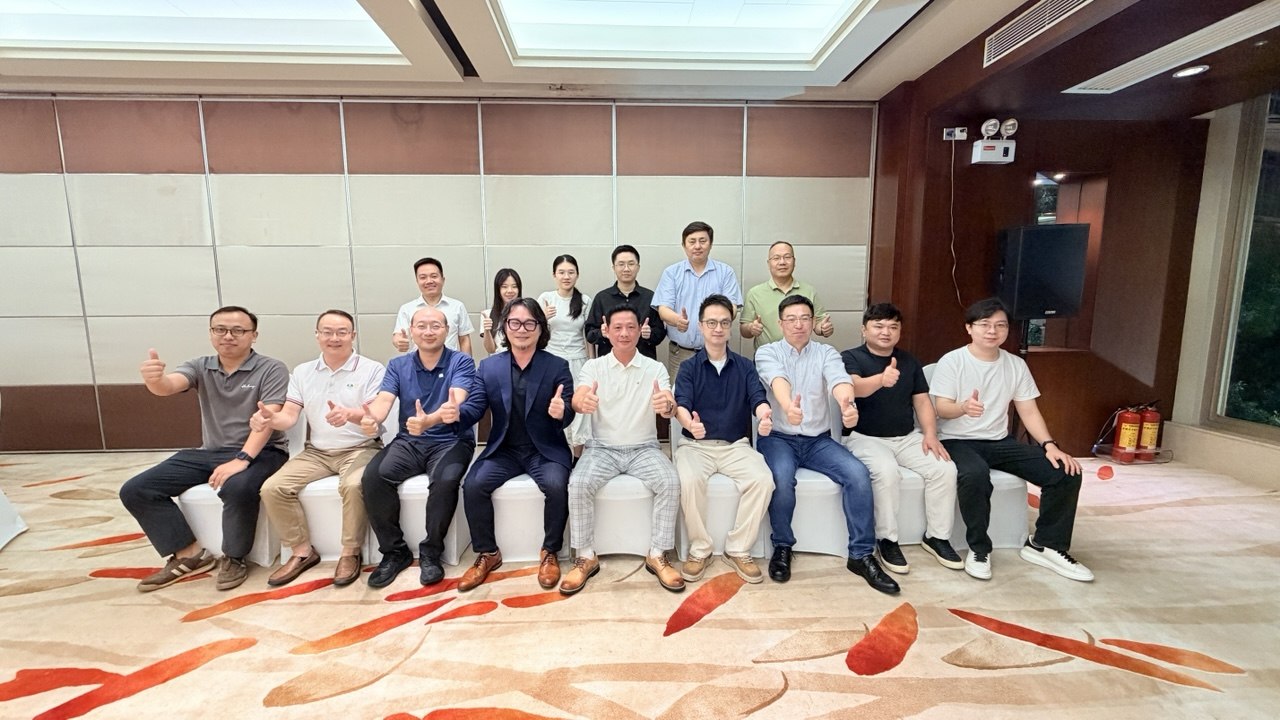
Want to prove it on your own part?
There is only one first step: pick the piece of tooling that costs you the most time, print it under NDA, validate clamping, rigidity and dimensions on the machine, and let the result decide the configuration.
Contact Markforged Greater ChinaSources and notes
- This report was written by Markforged Greater China from the presentation and floor recording of 17 September 2026.
- Cases and figures are drawn from Markforged's published case library and the presentation of the day, and can be verified at markforged.com.
- Photography: Guangdong, 17 September 2026.